LCRV Rarity Photos

I’ve been promising for a while to post photos of rarities that have been seen lately in the LCRV.  The thing is, the rarities just keep coming!  I have finally caught up, for now, and I present a suite of photos of recent rarities (all photos by Lauren Harter unless otherwise stated).

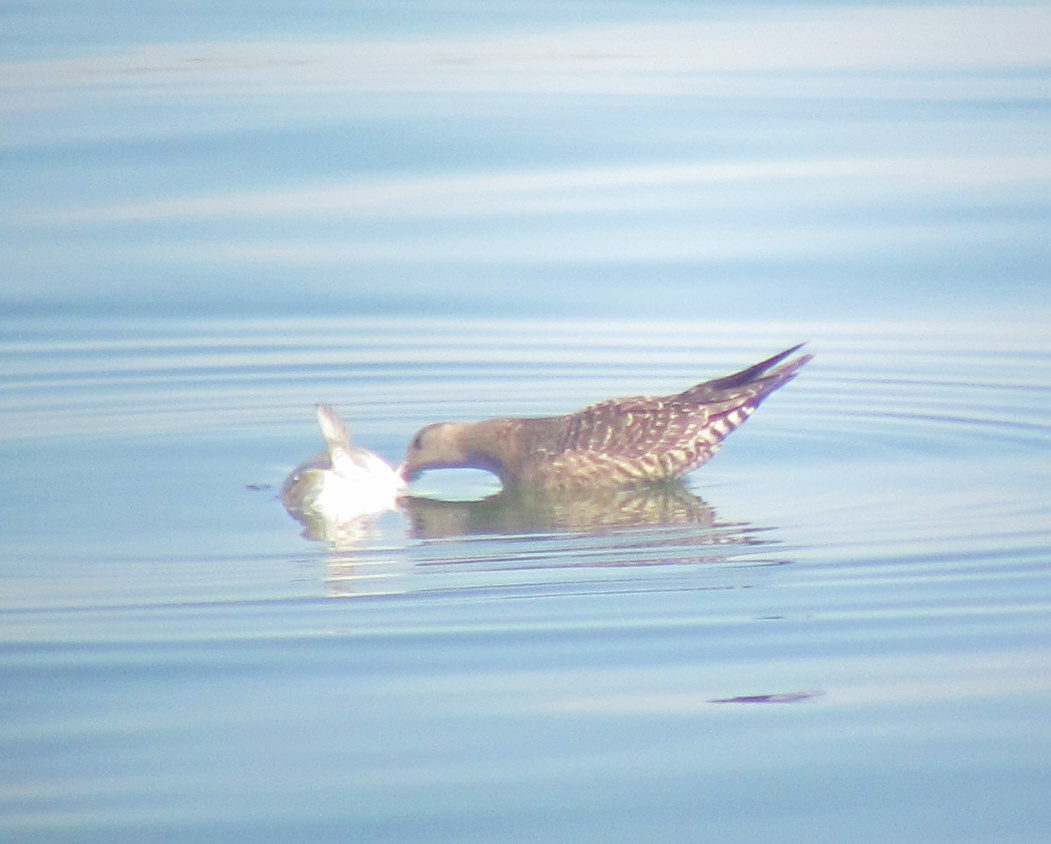
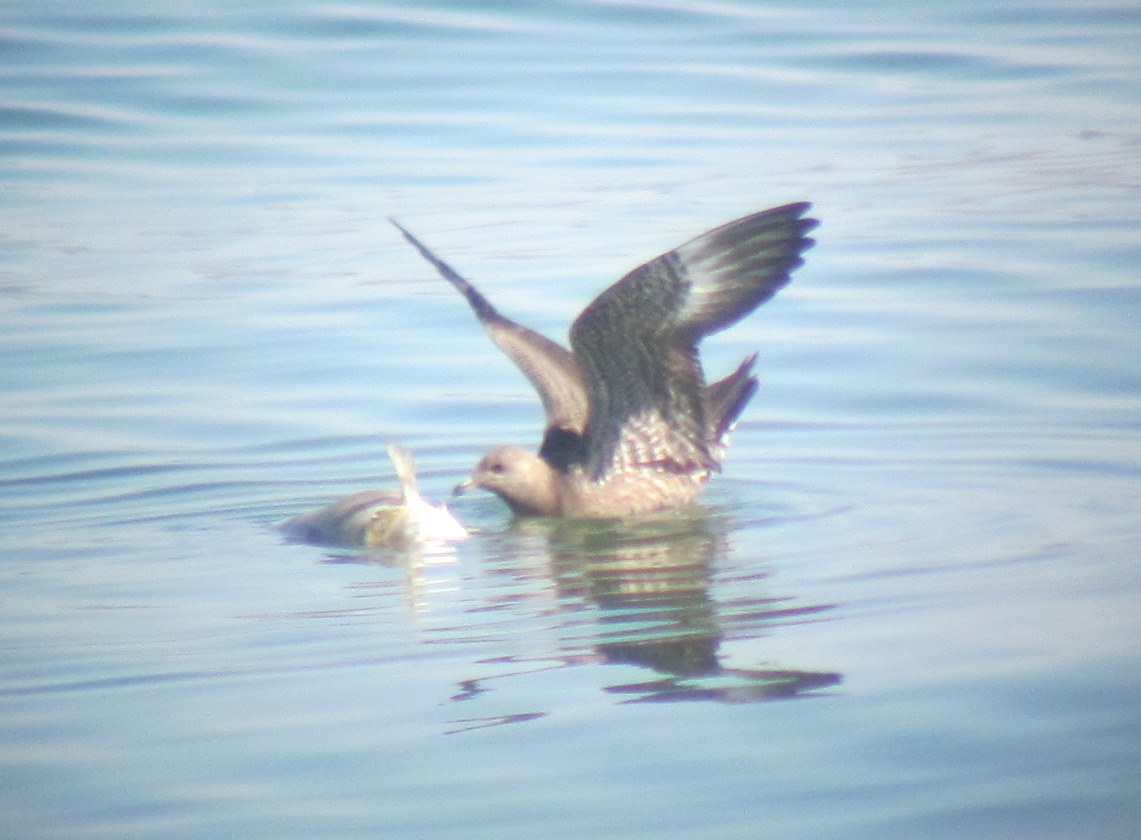
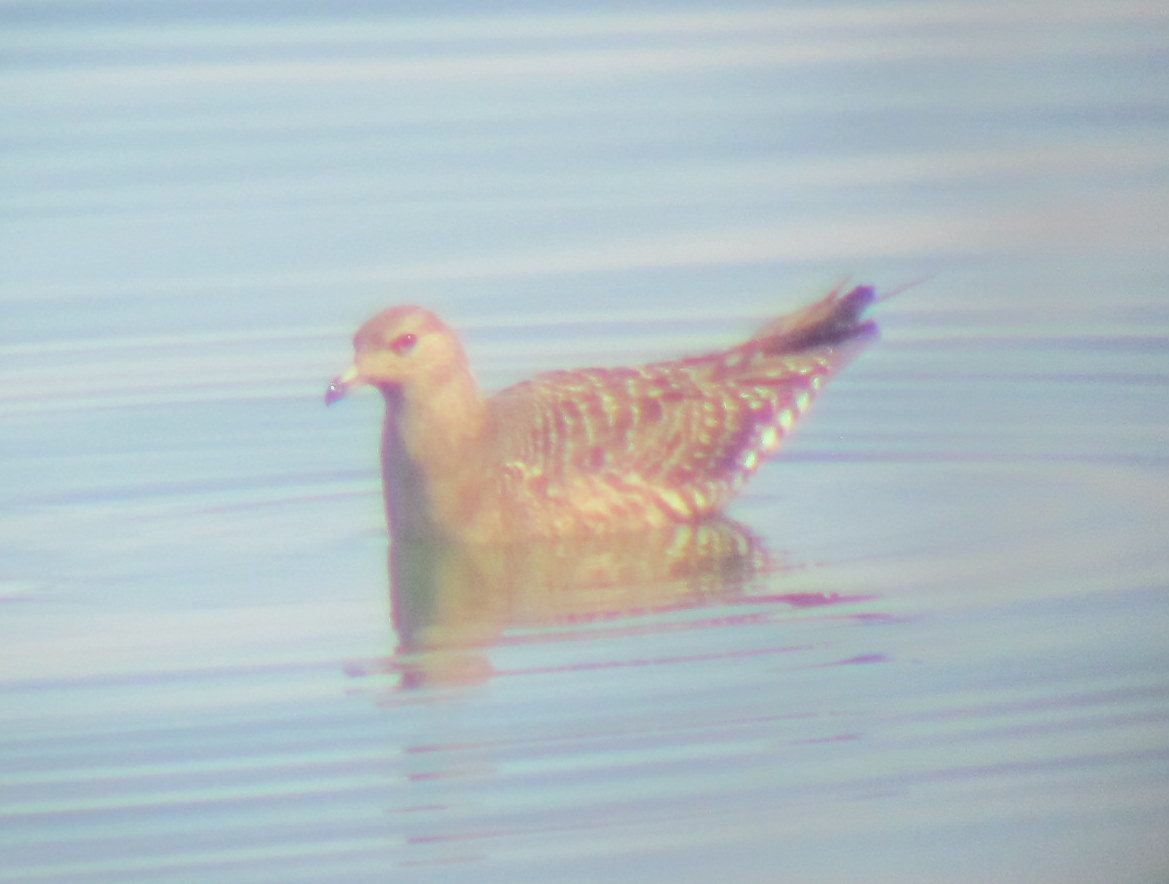
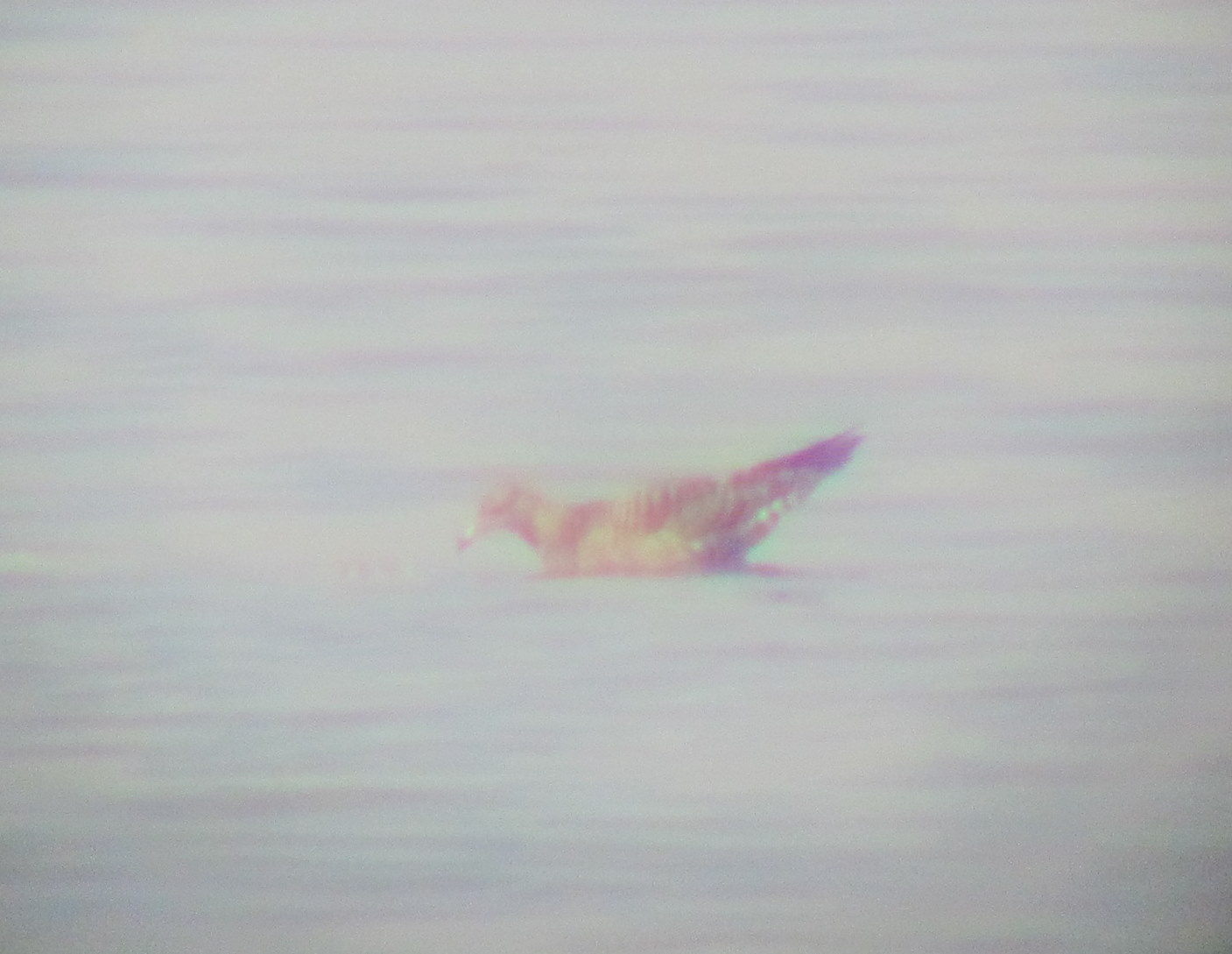
First, remember the Long-tailed Jaeger from my last post?  Since that sighting, we were having continual sighting of distant jaegers identified as “probable Long-tailed”.  I was getting pretty sick of jaegers after a while.  Finally, though, David managed to get some good, identifiable photos of a Long-tailed Jaeger.  Then, David and I spotted the bird sitting on the water not far off Pittsburgh Point.  It was gorging on a dead fish.  We were puzzled when it flew up into a cove and out of sight, and we couldn’t refind the bird!  I scanned from a rocky ridge while David walked the shoreline, both of us trying to turn up this bird.  Eventually David gave up and started walking up the next ridge over, only to see the jaeger sitting on top of the ridge!  David having inadvertently flushed it, the bird flew back to its dead fish–and right over my head.  I mean if I had stretched out my arm I could have pet this bird’s belly.  With the jaeger back at its fish, I digiscoped some better photos.

Photo by David Vander Pluym
These photos show the most important marks for Long-tailed Jaeger – lack of cinnamon tones in the plumage, bold black-and-white barring on the undertail coverts, two white primary shafts, boldly marked underwing coverts, whitish tips to upperwing coverts, and especially the two long central tail feathers.  The bill does look a little large for LTJA – remember that was one of the confusing features I mentioned in my earlier post – and just shows how important it is to note multiple features in juvenile jaeger ID!
In case anyone is wondering why I think this is the same bird I photographed before…
Photo from 15 Sept
Photo from 9 Sept
To get a bit more chronological, I’ll go back to August and our great shorebird migration.  Several Sanderlings were seen, particularly in the Bill Williams Delta, where up to nine were present at a time.  This bird was photographed in the Parker Strip on the California side, at Emerald Cove Sewage Ponds, August 30.
On a county level, one of the “better” birds in the LCRV this fall is the Tricolored Heron at the north end of Lake Havasu.  If accepted by the CBRC, this will be a first county record for San Bernardino County (CA) as well as Mohave (AZ)!  Oddly enough, Tricolored Heron turns up regularly in southern Arizona, but there are few records for the LCRV, and it is rare enough to be a review species in California.  This bird is also unusual because it is an adult.  It was first spotted August 10, and as far as I know it is still around!
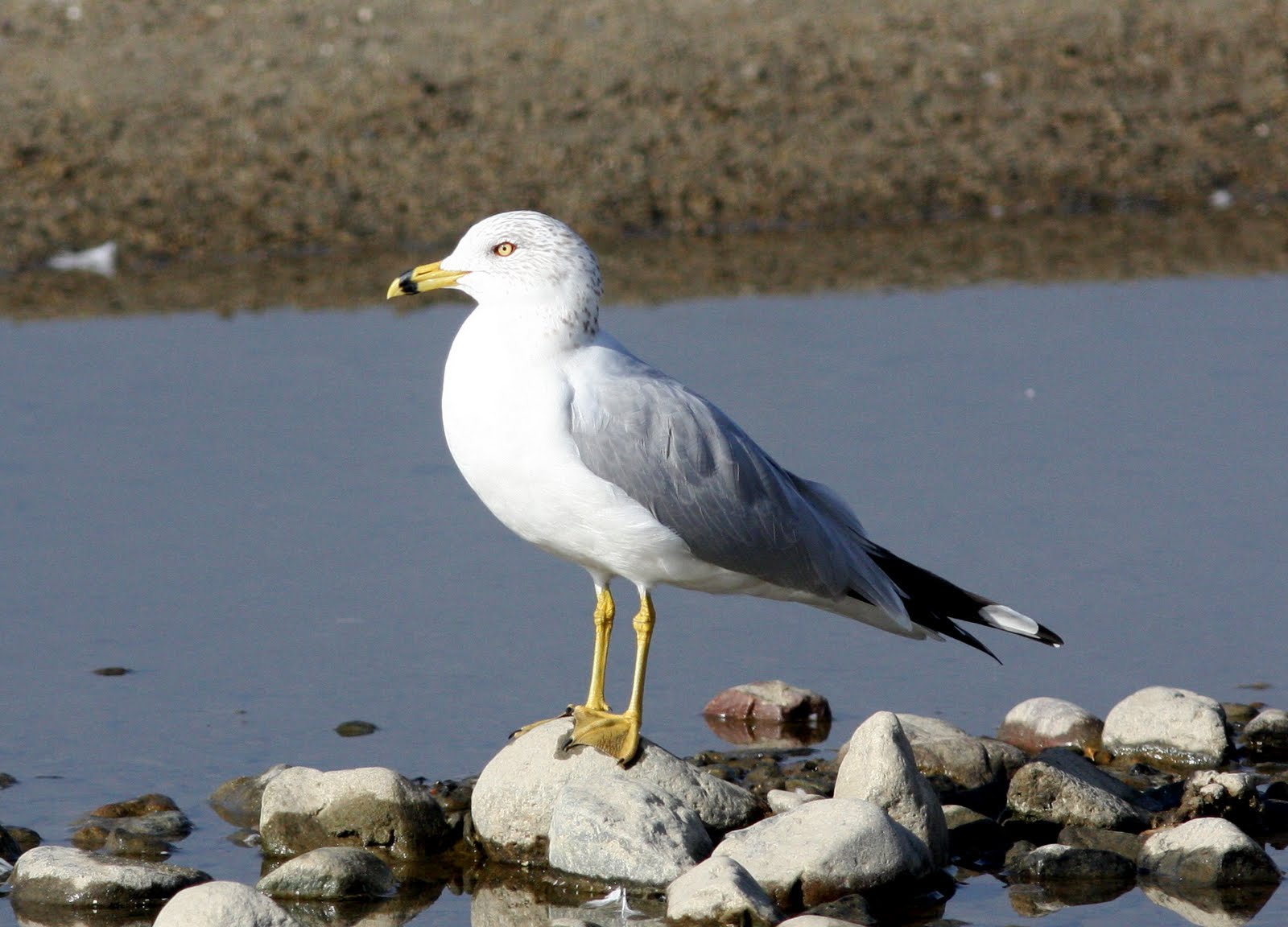
Sept 4, being chased by a Ring-billed Gull
Sept 12 photo by David Vander Pluym
John West has gotten some beautiful shots of this bird, which will hopefully be posted at the link above.
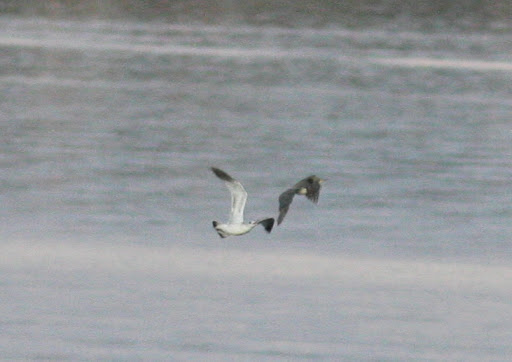
Back to jaegers for a moment is a single photo of our first jaeger this fall, a Parasitic.  This bird flew by us on the hill without stopping for a moment, heading north.  It came by close enough for photos, but not close enough for good photos!
Sept 6 photo by David Vander Pluym
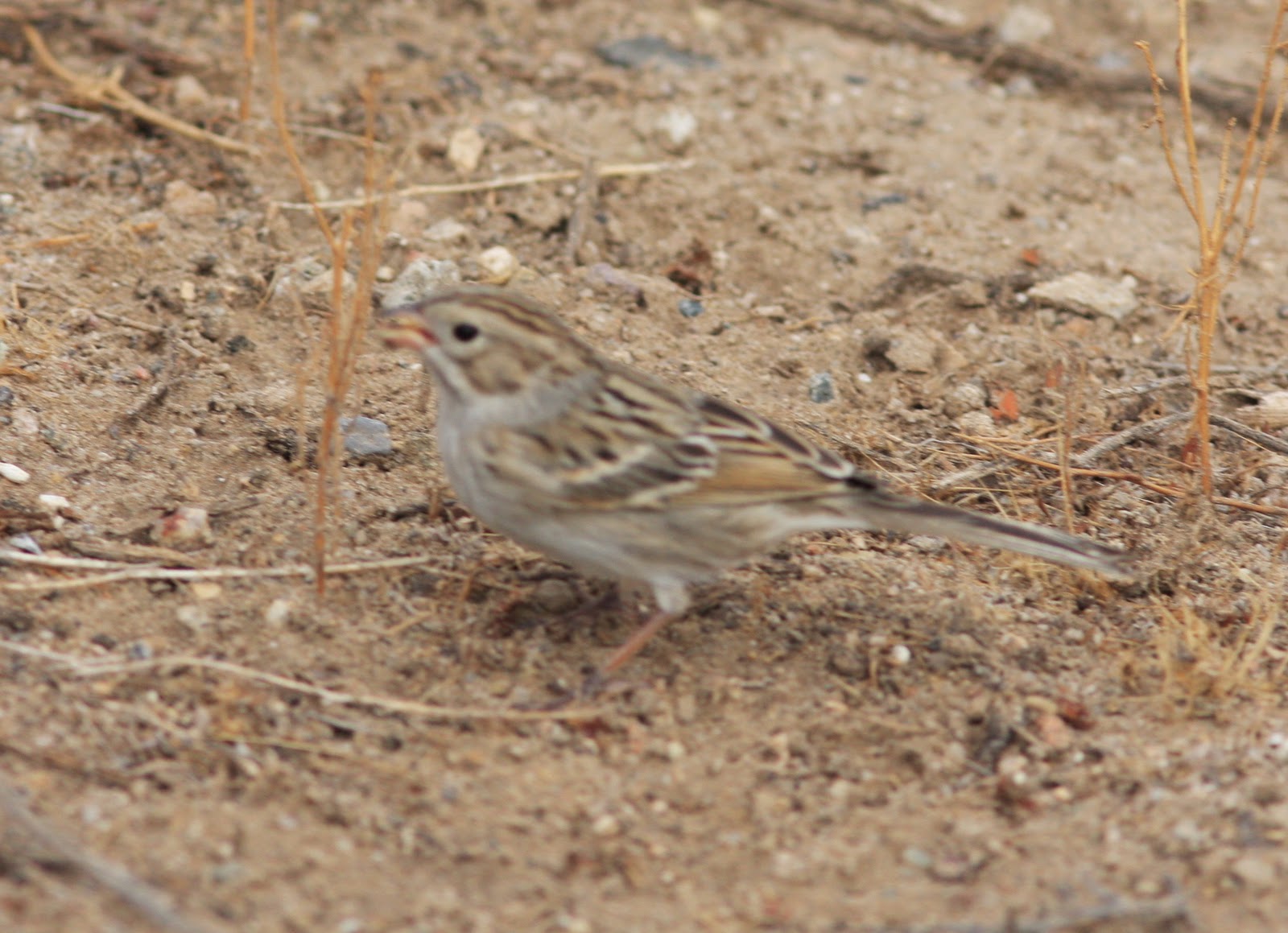
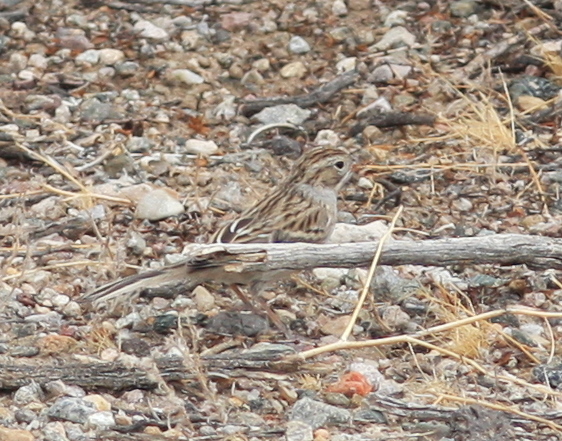
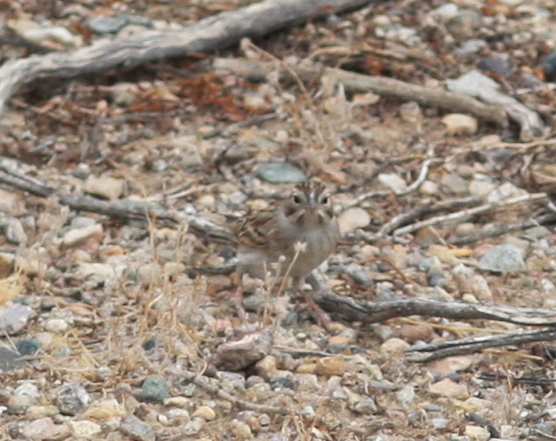
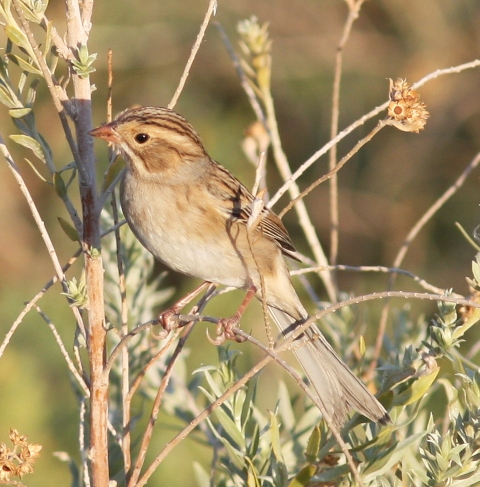
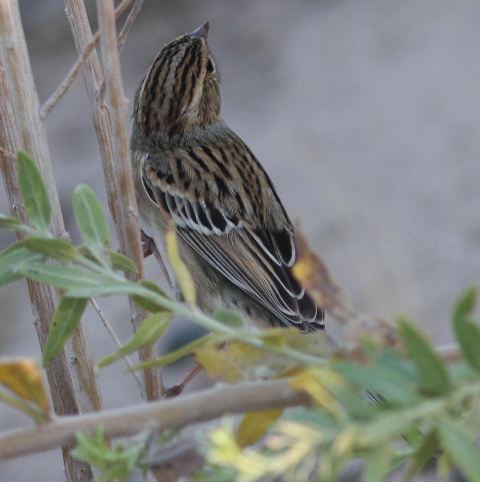
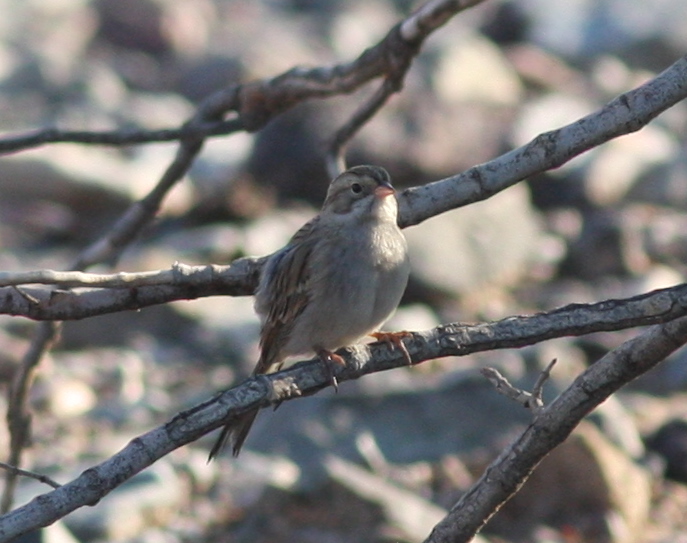
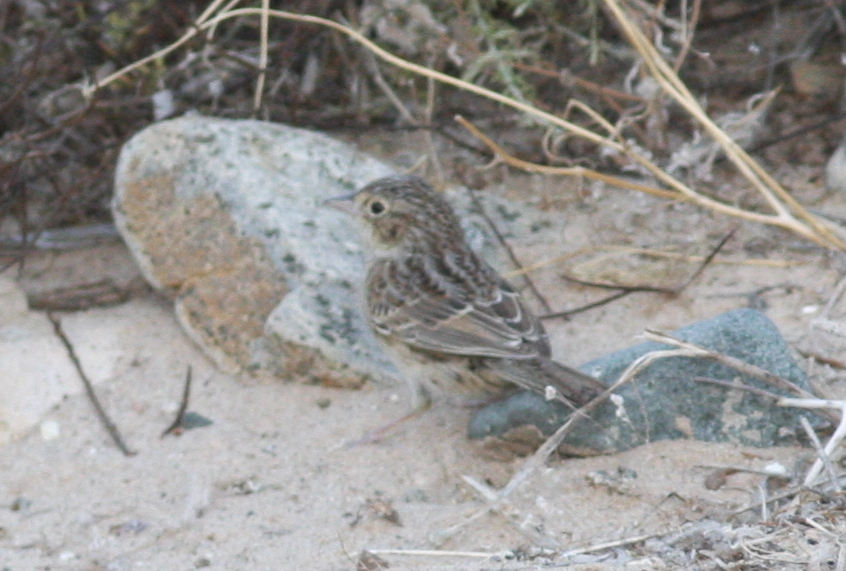
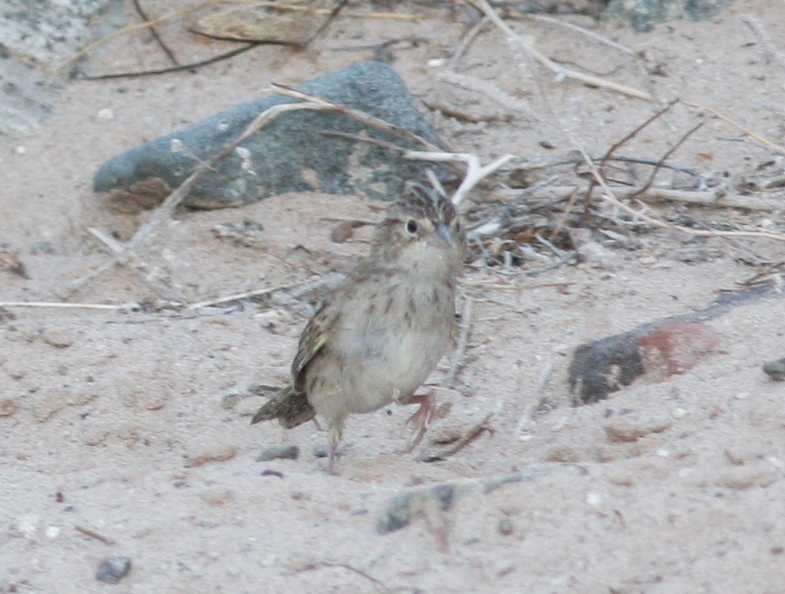
Next up is a round of photos of Spizella sparrows.  Usually, there is little difficulty in distinguishing Clay-colored and Brewer’s Sparrows.  Clay-colored is a much brighter, more distinctly marked bird, with a broad buffy supercilium and gray nape, both unmarked.  Clay-colored also has a distinct dark lateral throat-stripe and a less distinct, partial eye-ring.  Brewer’s typically shows a much more muted face pattern, with short dark streaks on the supercilium and nape, a dull, indistinct lateral throat-stripe, and a bright, complete eye-ring.  Clay-colored also shows a distinct pale central crown-stripe – Brewer’s can show a less distinct stripe, but this is one feature that doesn’t seem to overlap.
On Sept 9, I encountered a flock of Spizellas that seemed to be mixed Clay-colored and Brewer’s.  Being inexperienced with fall Clay-colors, I just started snapping photos of every bird I could get close to.  Later I examined the photos and read up on Spizella identification.  An excellent article by Peter Pyle and Steve Howell can be found in Birding 28:5 (Oct 1996), “Spizella Sparrows: Intraspecific Variation and Identification”.  After reading this article and other information on Spizella ID, studying my photos and grouping photos of individuals based on individual feather patterns, I concluded that I had photographed four Clay-colored Sparrows in this flock.  As Brewer’s Sparrow migration has continued, I have come to appreciate the range of variation that this species shows.  Many of the birds I encounter have gray napes and broad supercilia only slightly marked with streaks, as well as distinct dark lateral throat-stripes.  The mark that these birds do not show is the distinct pale central crown-stripe.
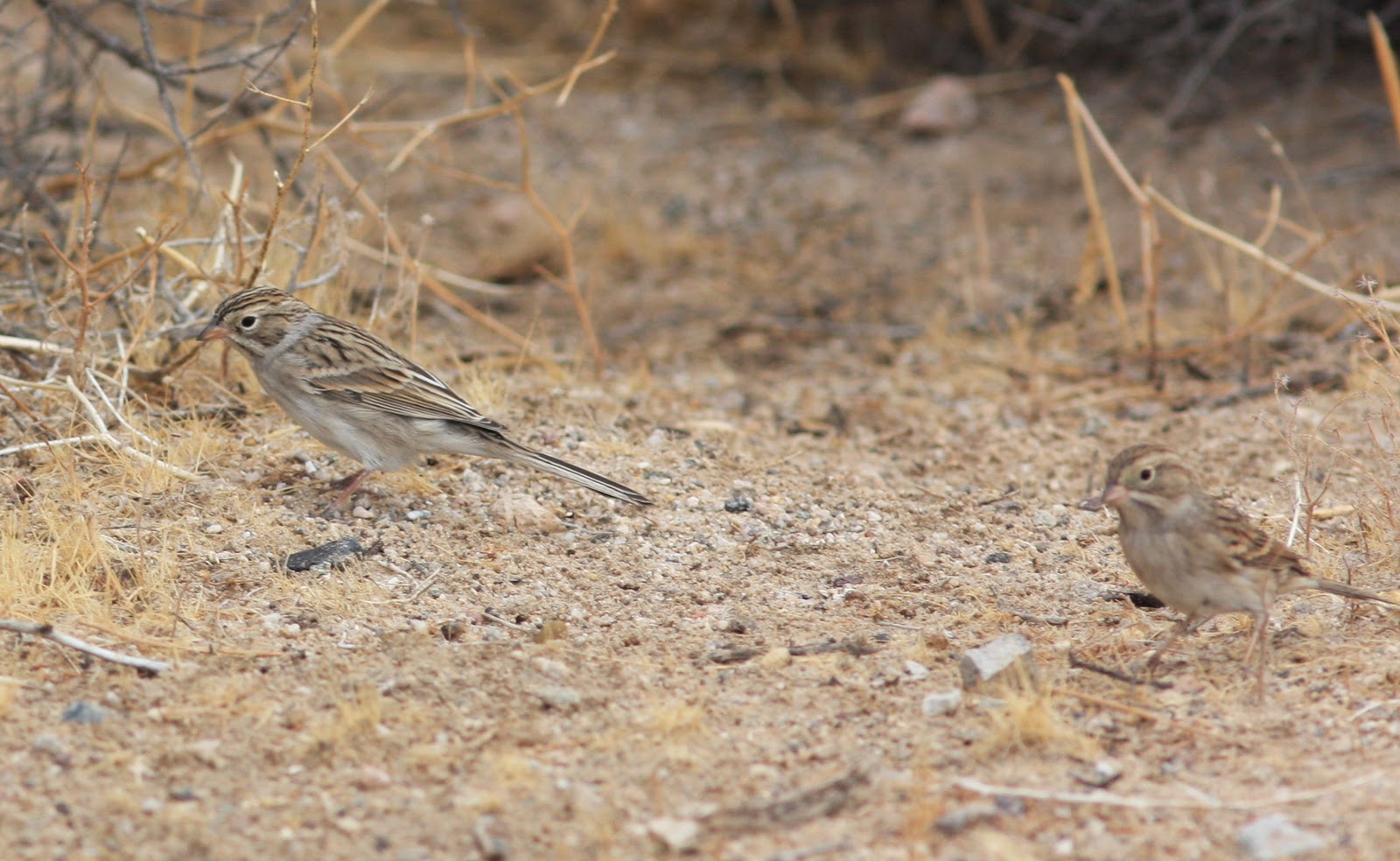
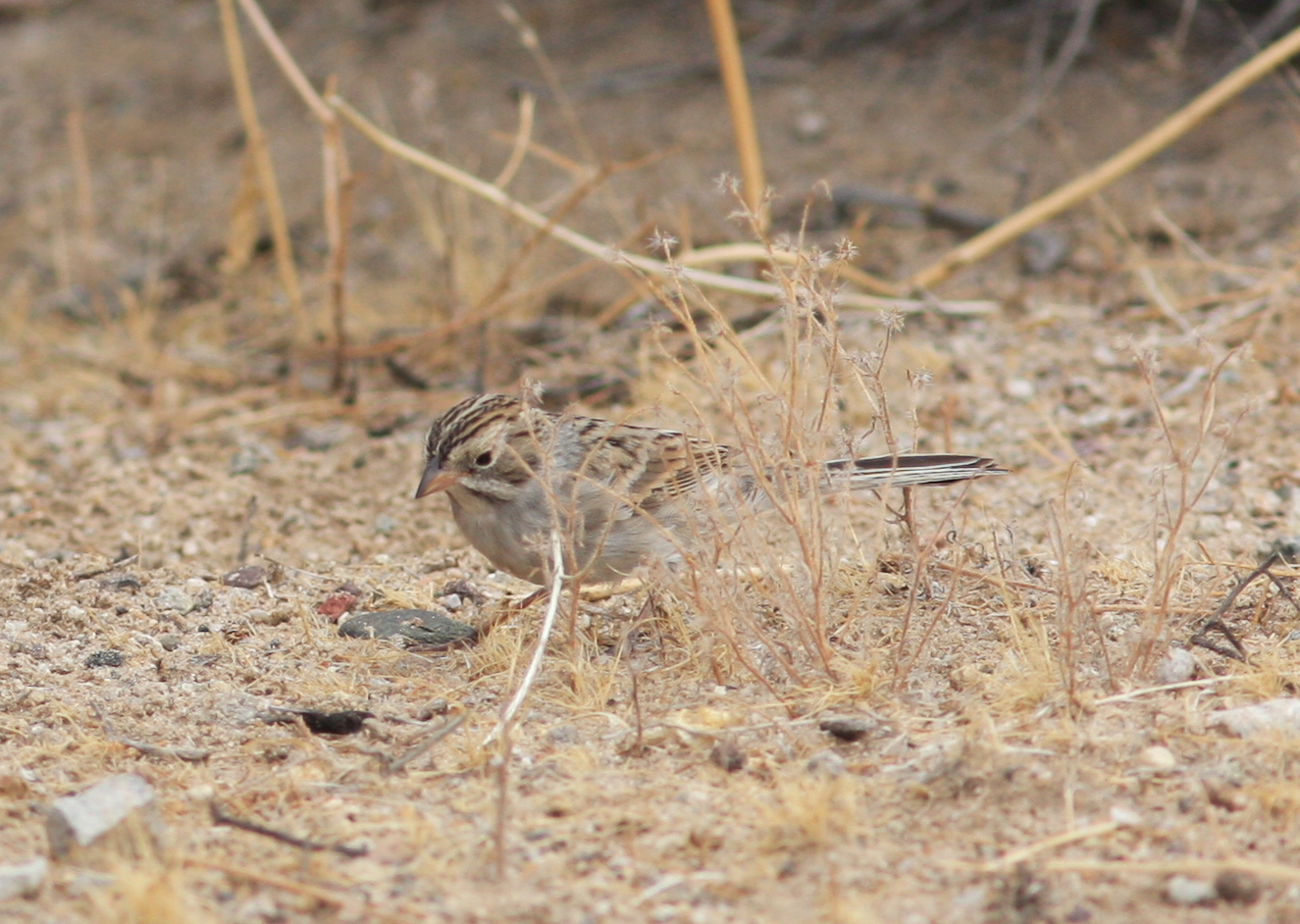
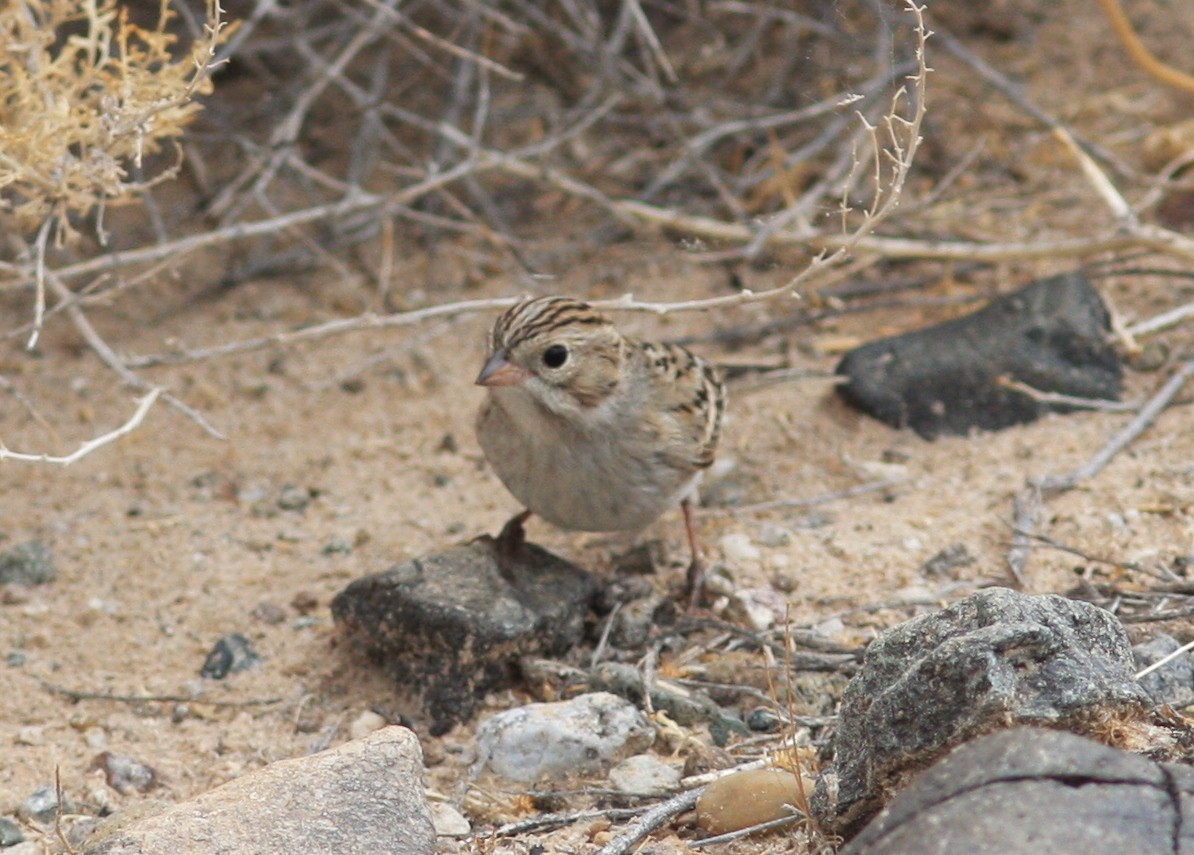
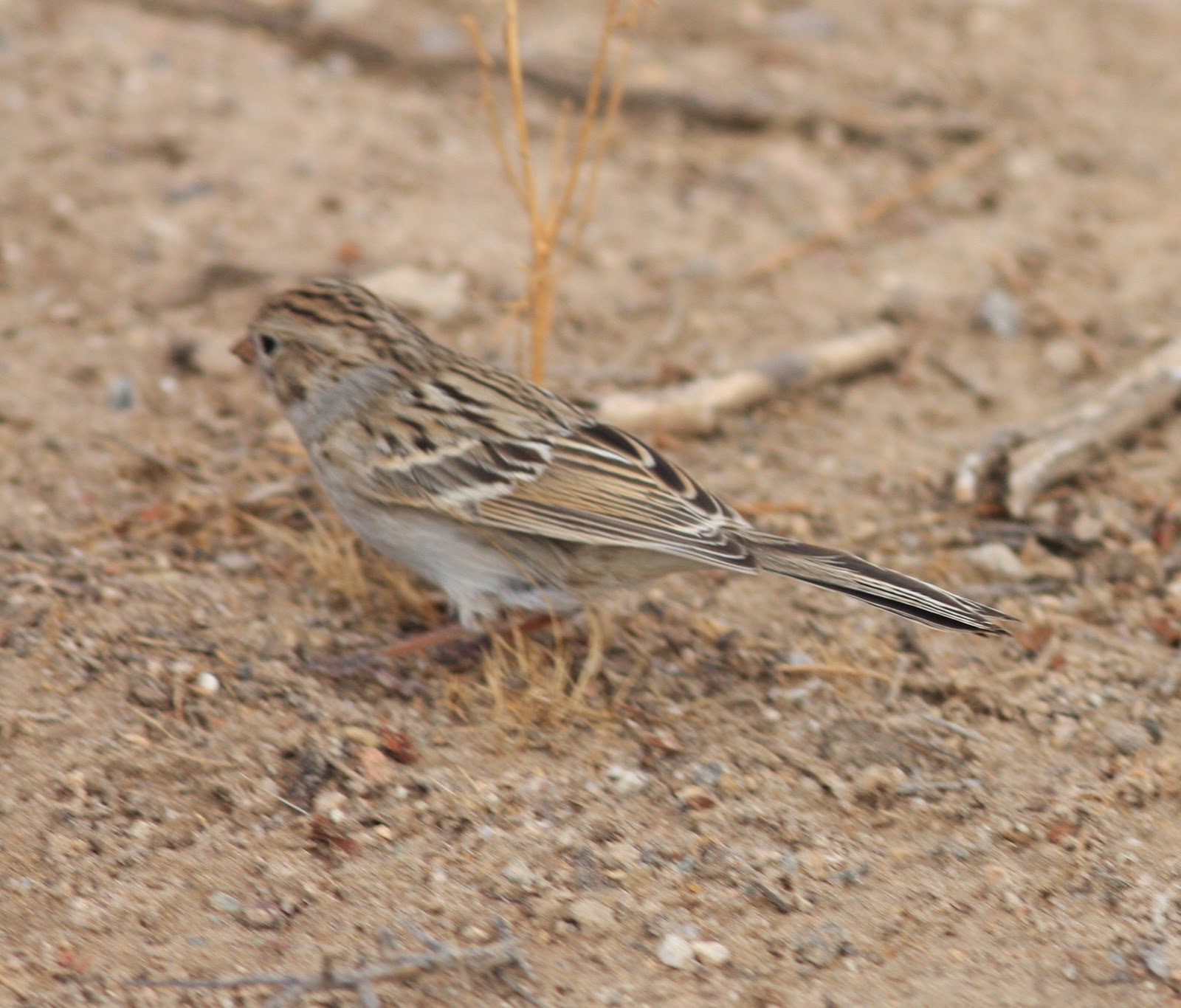
I would be interested in hearing comments on the four birds that follow from anyone familiar with fall Clay-colored Sparrow, as none of these birds are quite as bright as I would expect from a typical CCSP.  I have plenty more photos and full-size versions for anyone who is interested.
Bird #1 (left) with Brewer’s Sparrow (?)
Bird #1, showing central crown-stripe
Bird #1, closer look at face and nape pattern
Bird #2, the most confusing individual to me.  It has a muted face pattern, although the supercilium and nape do not seem to be streaky, but it shows a distinct central crown-stripe.
Bird #2, side view.  Is this a Brewer’s Sparrow with an unusually distinct central crown-stripe, or a very dull Clay-colored Sparrow?
This was bird #4, but as I went to add these photos I realized that it’s the same as bird #2…
Bird #2, blurry but in better light?  Looking much more distinctly patterned…
Bird #3
Bird #3 and its central crown-stripe
The next Clay-colored Sparrow showed up September 10-11, and this bird was a beauty!  After straining my eyes looking at individual feathers on the preceding birds, it was nice to see a CCSP that was very brightly marked, and buffy on the breast.
Both photos Sept 11 by David Vander Pluym
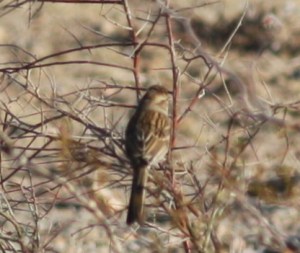
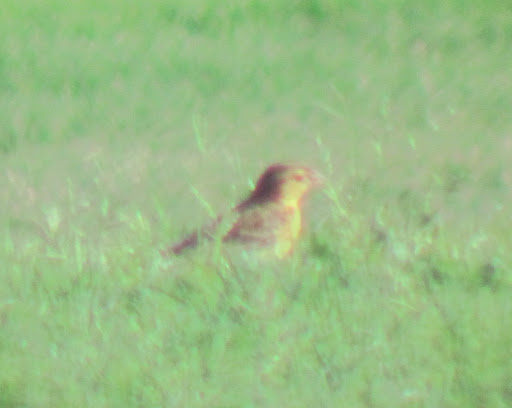
But that’s not all the CCSP observations!  At the same location, I saw one September 14.  I saw it well but briefly when I first arrived at the spot, then later I believe I got a fuzzy photo of the bird (below) – I was focusing on taking pictures so I didn’t get a clear view in the field the second time I saw it.
CCSP?
Just for fun, I think this is one of those well-marked Brewer’s Sparrows that shows a central crown-stripe.  Or maybe it’s another Clay-colored…
Birding the same spot Sept 25, I saw yet another CCSP – this really seems to be a hotspot.  Finally, I have heard that David found on on the California side of the Parker Strip this morning!
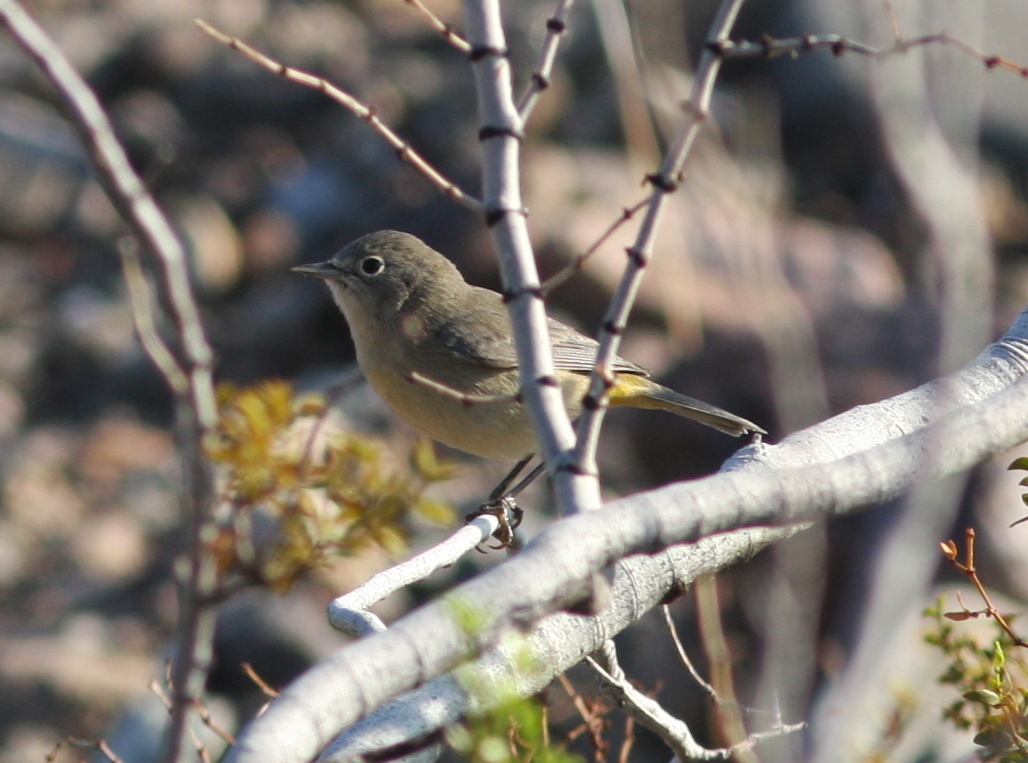
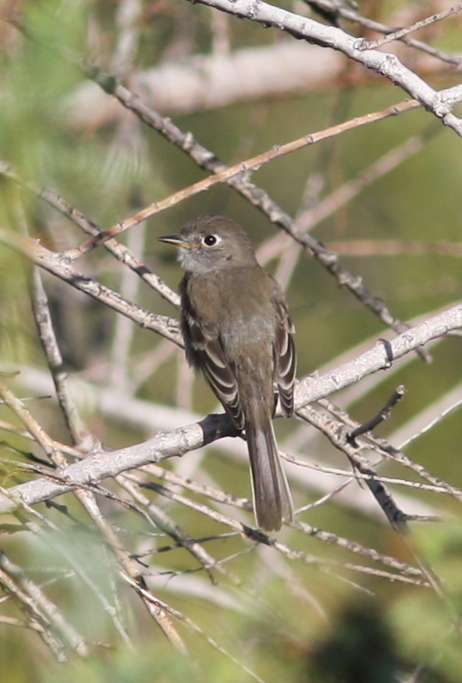
Back to September 14, a day when the north end viewpoint was alive with migrants.  In addition to the Clay-colored Sparrow, I had a Virginia’s Warbler and Dusky Flycatcher, both good birds in the LCRV.
Virginia’s Warbler
Dusky Flycatcher.  The short primary projection and long tail are visible in the photo; it was also giving a “whit” call in the field.
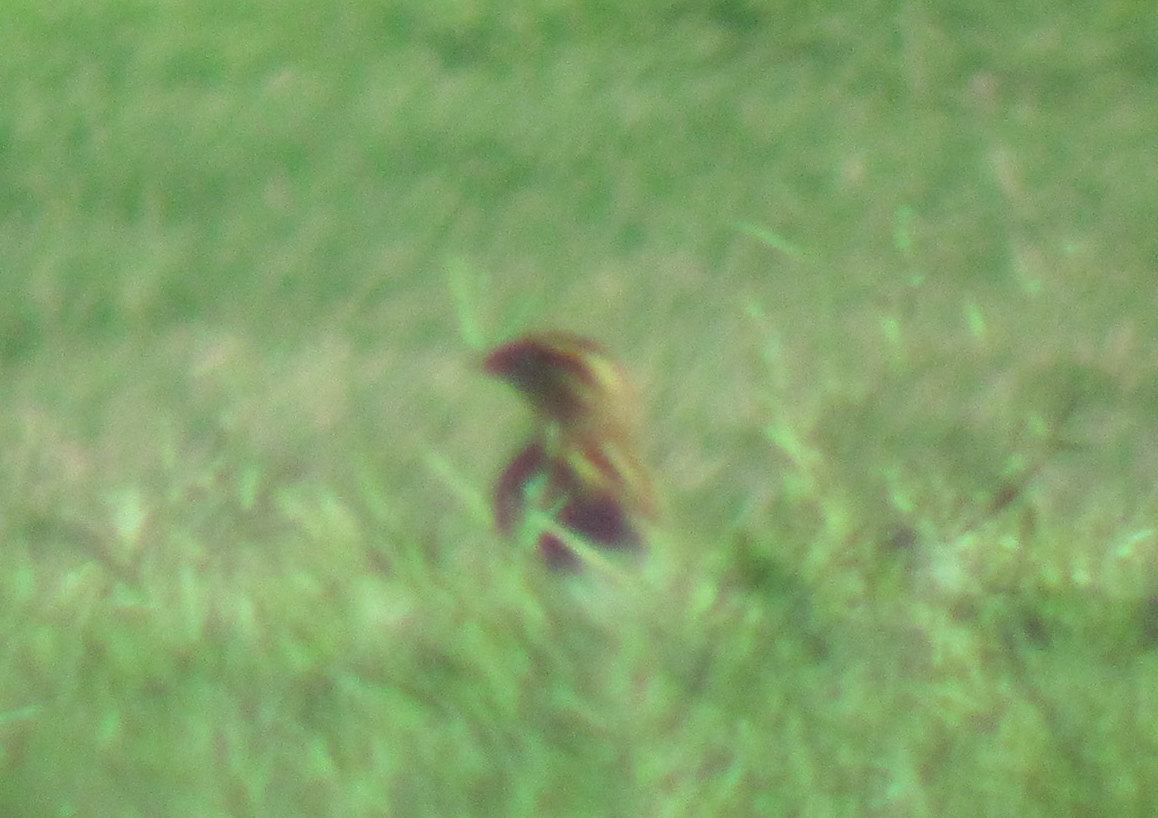
Moving on to the next bird, the Bobolink.  The story of its discovery is pretty amazing, I think.  I was birding the north end viewpoint with my friend David Rankin.  While he was standing on the hill and I was birding the riparian below, I saw him suddenly look at something with binoculars, and I heard this weird soft call.  As a bird flew over his head, he took his binoculars down, pointed at it, then raised his binoculars again.  I got my binoculars on it as it flew over, calling again, “boink”.  I saw a yellow bird with a few distinct streaks on the flanks.  We both agreed that this had to have been a Bobolink, but for such a rare bird in Arizona, our view was frustratingly brief.  I had to forget about it, because as I told David, there was no way we would be able to find it again – it showed no signs of stopping, and even if it did, there is plenty of potential habitat for it along the lake shore!  So we continued birding and, over an hour later, made our way to Rotary Park.  David got out of the car and started scanning the golf course–and almost immediately spotted a yellow bird among the sparrows.  I got my scope on it and, sure enough, it was the Bobolink!  It happened to land on this golf course, over 4 miles from the north end where it had flown over us, and in a place where David was able to find it again!  This was September 21, and it was still present as of yesterday (Sept 26).  It has been seen by many birders, fortunately.  Following are a few of my photos from the day it was found, but better photos can be seen here.
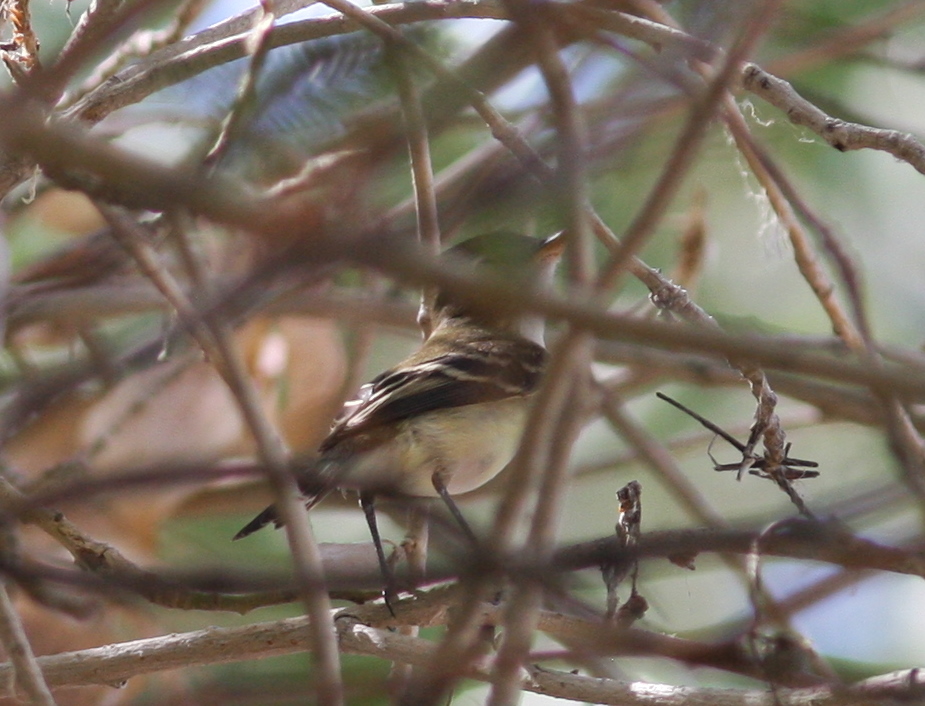
The next bird was very frustrating in the field.  Birding ‘Ahakhav Tribal Preserve, I spent quite a bit of time in pursuit of an Empidonax flycatcher giving a “whit” call.  Typically the only two species that give such a call in the LCRV are Willow and Gray Flycatchers.  Once I got a brief view of the bird, I could see that it wasn’t a Willow, and the bill wasn’t right for Gray.  I tried to get a better view, thinking it may be a Dusky, a fairly rare bird in the LCRV.  Eventually the bird sat in the open for a moment, and I saw very contrasty wings, and odd tail-flicking behavior – it was flicking its tail quickly down.  Both are features of Least Flycatcher.  David and I spent the next few hours trying to get good views of the bird, and David finally managed to get some decent pictures.  It’s the bill that clinches the ID – the long narrow bill with about a substantial dusky tip points to Dusky Flycatcher, not Least.  Not the rarity we would have liked, but still a good bird!
Both photos Sept 25 by David Vander Pluym.  Bill shape and pattern characteristic of Dusky Flycatcher shown well in the first photo.  Wings looked more contrasty in the field than they do in the second photo.
Birding along the state line between Arizona and California produces some interesting patterns.  One thing we have noticed is that sometimes, you see a bird that is a much more interesting record on one side of this imaginary line than the other.  Neotropic Cormorant is one example–they always seem to turn up in Arizona, but they are a Review Species in California.  Similarly, a jaeger on the California side is a good bird for the inland counties, but all three jaegers are Review Species in Arizona.  Yesterday, I saw one of these species: a Cassin’s Sparrow.  While this species is common in southeastern Arizona, there are few records for the northern and western regions of the state.  Rosenberg et al. only lists one record from the LCRV, in La Paz County.  This summer, David and I found the first in Mohave County – around Peach Springs, we had several singing birds.  This was a good year for them in northern Arizona, with reports across the northern tier of the state.  Across the lake in California, Cassin’s Sparrow is a Review Species.  There have been several records of singing and even breeding birds in San Bernardino County, but only in very good years.
The Cassin’s Sparrow I saw yesterday was in Mohave, at the north end viewpoint.  This was a very surprising find, with the bird not only out of range but in unusual habitat.  I came around a corner to see a sparrow feeding on the edge of some dense vegetation on the lake shore.  Thinking it would be a Brewer’s Sparrow, I got my binoculars on it in time to see a scaly pattern on the back and crown, and I knew it was a Cassin’s Sparrow.  It disappeared into the brush as soon as it saw me, peeking out only for a moment so I could see a distinct eye-ring.  I then waited and waited, staring at the brush pile and trying to ignore all the Brewer’s and Chipping Sparrows, Orange-crowned Warblers, and other birds flitting all around me.  Eventually, the Cassin’s Sparrow did come out, and I managed to get some decent photos.
Note plain dark tertials with distinct white edging, scaly-striped back pattern, eye-ring, and yellow supraloral, as well as shape.
Note faintly streaked breast, yellow at bend of wing, and dull yellow supralorals
That’s it for now.  Until next time!
Posted in Havasu NWR, Identification, La Paz County, Lake Havasu, LCRV, Mohave County, San Bernardino County, Vagrants | 1 Comment

Long-tailed? Jaeger

We’ve been scouring the lake lately for jaegers – those wonderful winged pirates – given all the reports coming from the inland southwest.  We were rewarded a few days ago with a flyby Parasitic that hasn’t shown itself since.  What we have seen a few times is a faraway dark jaeger in flight, disappearing into the haze over California waters.  Today, arriving at my favorite lighthouse on Pittsburgh Point, I spotted a jaeger almost immediately – quite possibly that dark-looking bird that has been so distant before.  It stayed on the water a long time and I was able to digiscope some very bad photos of it.

I initially identified the bird as a Long-tailed based on proportions and shape.  This photo shows the shape best.

It looks evenly proportioned – no shrunken head look – and overall slender and delicate.  The apparent size of the bill varies among all the photos.  In the field, it looked very slim.  After noting the shape and making a tentative ID, the bird swiveled in the water and I was able to see the striking black-and-white barred undertail coverts (not shown well in this photo).  Soon after, it dunked its head underwater, slightly spreading its wings and exposing its full spread tail.  The central rects were very conspicuous, much longer than the surrounding feathers.  They looked full and rounded, quite a contrast with the quick view I had of the recent Parasitic Jaeger.  (Juvenile Parasitic Jaegers have central rects slightly longer than the others, and distinctly pointed – a feature that was easy to see even at a distance on the recent Havasu bird.)  The combination of the pattern on the undertail coverts and the shape of the central rects led me to conclude that this bird was a Long-tailed Jaeger.

These photos show how much the apparent bill size changes from photo to photo!  What is more clear is the pattern of the undertail coverts – barred black and white.  The bird faced away from me many times and I was able to note that this pattern passed across the entire undertail, unbroken.

The apparent color of the bird changes dramatically in the photos depending on the settings I was using, as well as the cloud cover, which varied during my stay there.  In flight, the bird looked very much like this – dark overall.  Even in this photo, where the bird looks much darker than it looked in the field, the black-and-white undertail coverts are visible (though it doesn’t show up well on the smaller blog version).

I saw the bird in flight only twice, and never well.  When it finally left the area, it spent most of its flight flying directly away from me.  As I said above, it looked rather dark overall in flight.  One thing I noticed – which had me scratching my head – was the pattern on the upper surface of the primaries.  A Long-tailed Jaeger should show only 2 primaries with white shafts, but this bird seemed to have 5 or 6.  In active flight, I could only see one or two pale primary shafts – it was when it spread its wings completely before landing, or when it lifted its wings as it sat on the water, that it seemed to have so many pale primary shafts.  This isn’t considered a good field mark, as it is subject to a lot of variables in the field that affect the apparent number of pale shafts, but it did make me scratch my head – could it be a Parasitic?

There are a few other features of this bird that don’t sit right for Long-tailed.  It looks a little brown overall (in the photos as well as in the field), and the bill looks a little big in several of the photos.  In the field, I tried to judge the percent of the bill that was black (the size of the nail), and judged it to be a little less than half.  The photos seem consistent with this.  This photo shows it best:

Despite these points, I think that the pattern of the undertail coverts, the shape of the tail, and the overall shape all point to Long-tailed Jaeger.  I would love to hear opinions from others on this confusing bird.  In the mean time, David and I will certainly be out there tomorrow trying to get better looks and better photos!

Posted in Identification, Lake Havasu, LCRV, Mohave County, Vagrants | Leave a comment

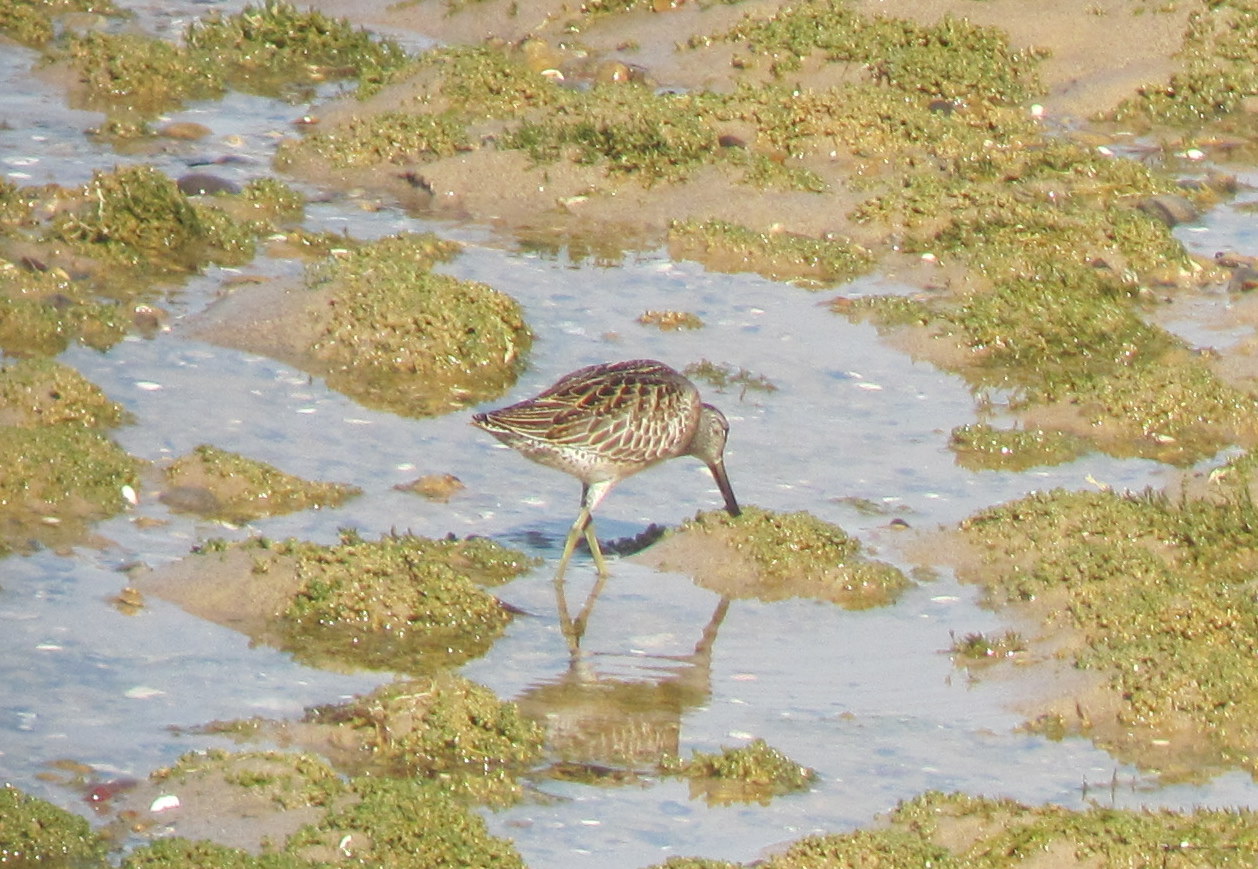
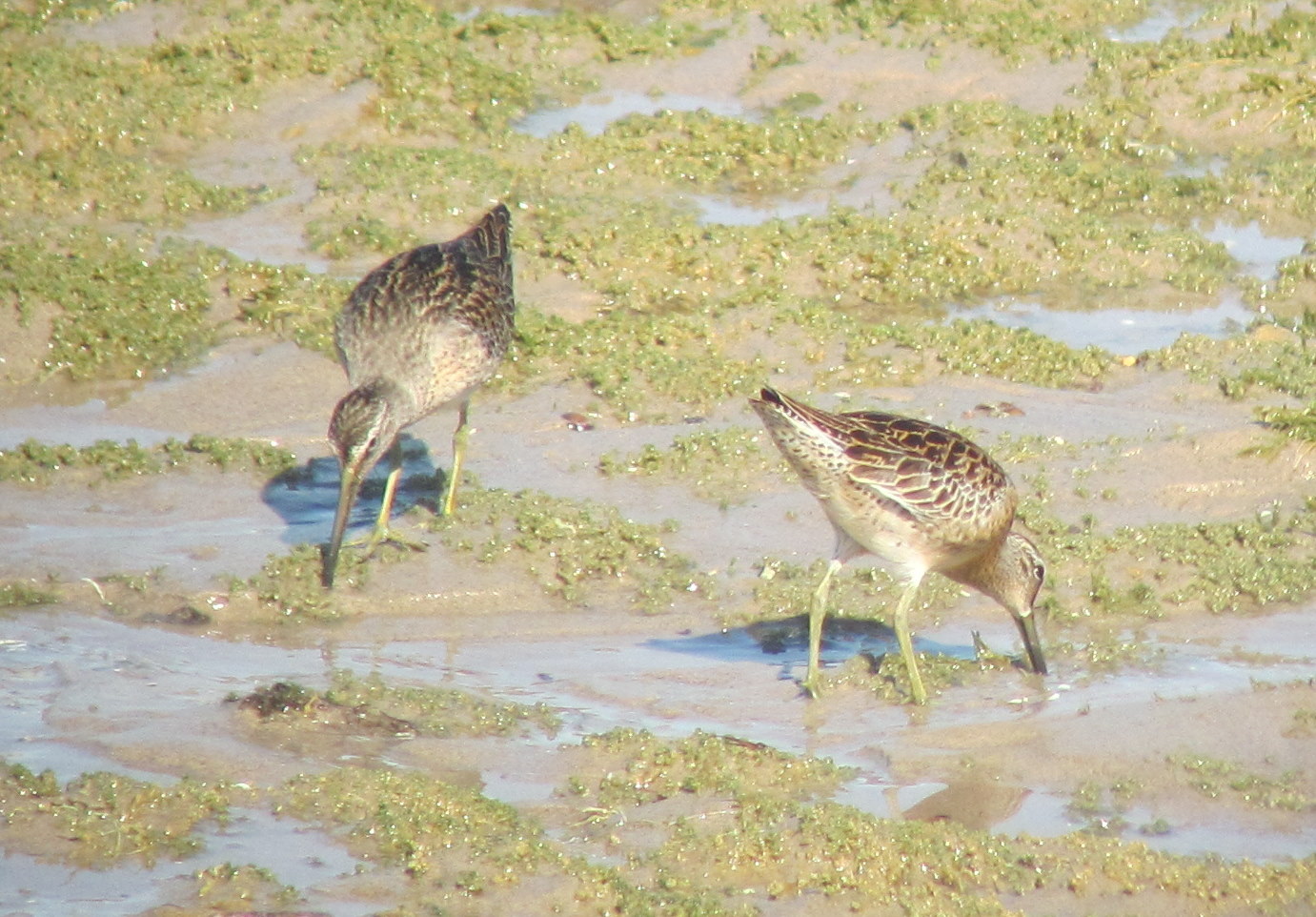
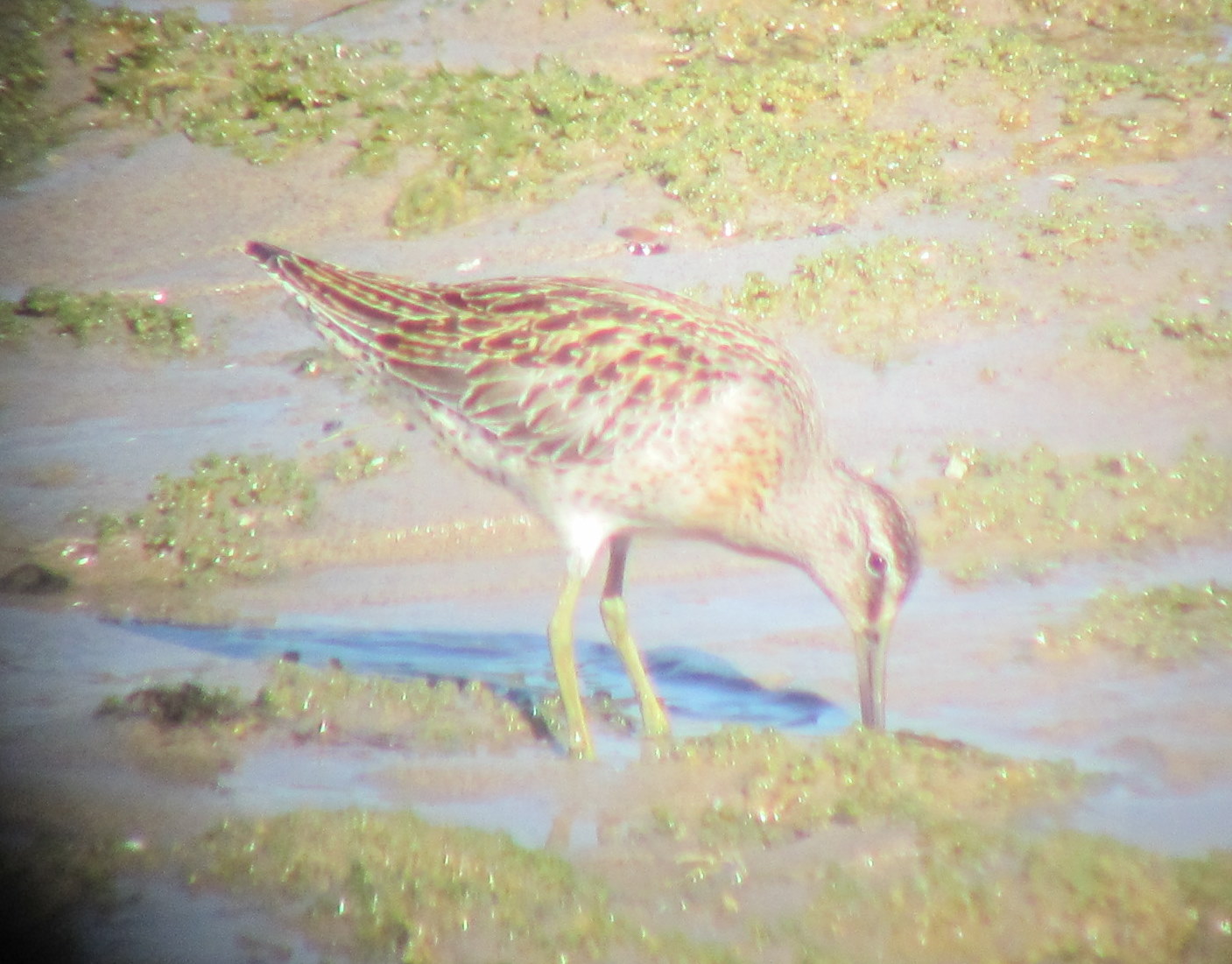
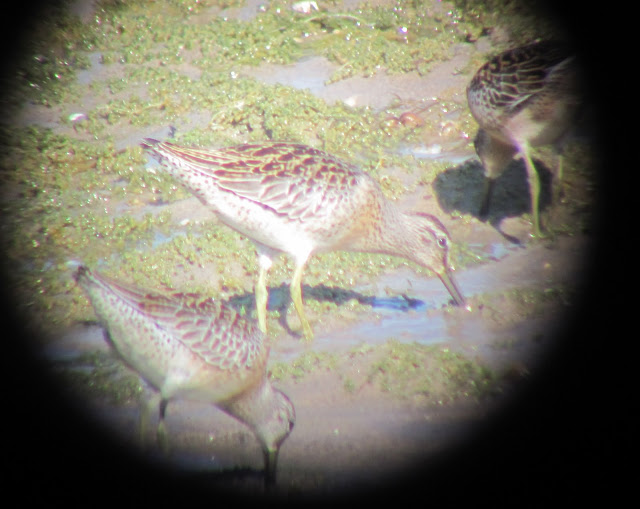
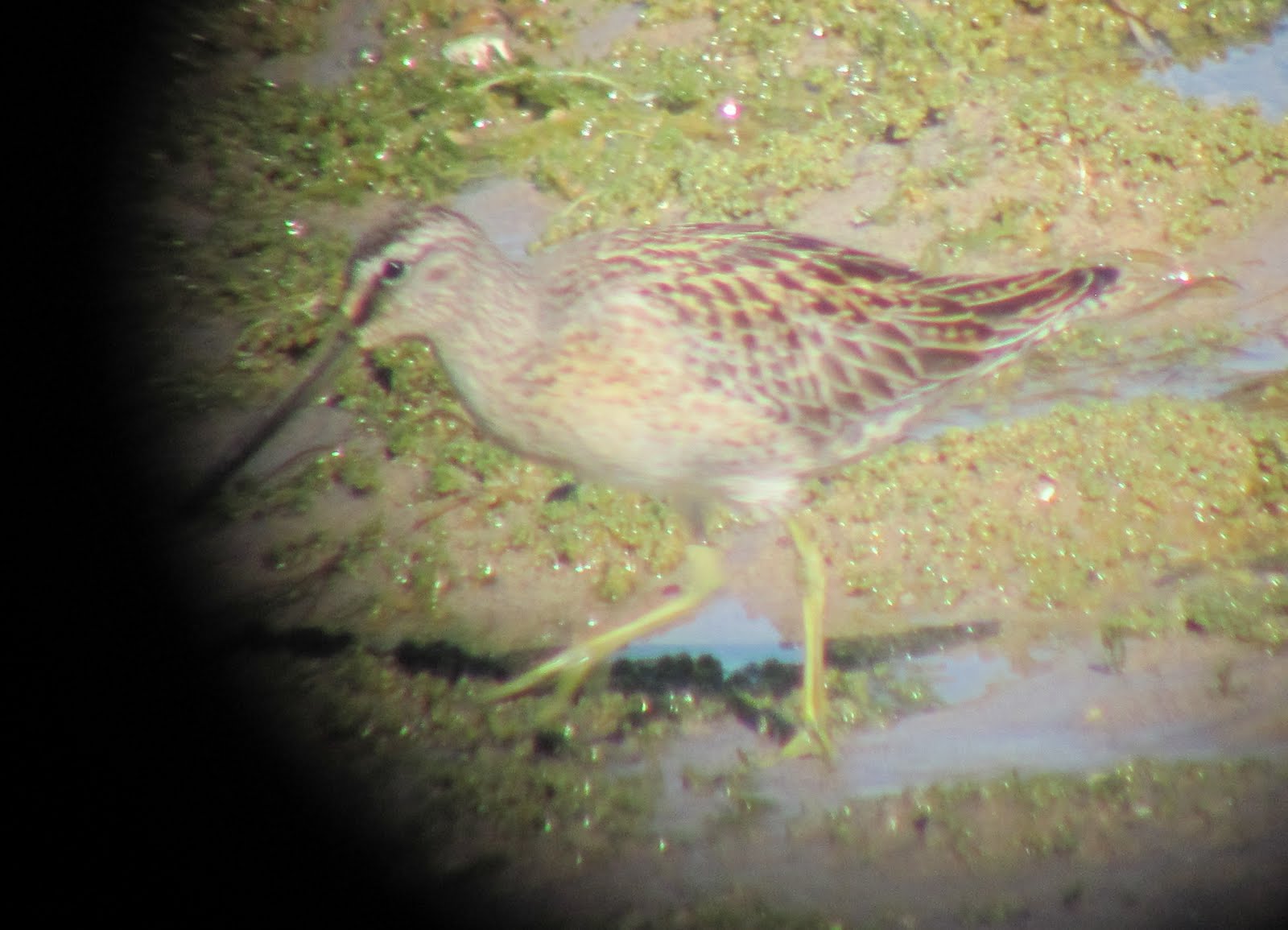
Short-billed Dowitchers

As I mentioned in my Beal Lake post, we have had quite a few Short-billed Dowitchers in the area lately.  Our first was at the Island STP August 24.  The next day, David and I counted 18 on Beal Lake.  Today, we counted 16 there, plus another 27 along the Colorado River in a 4-mile stretch near the CA/NV/AZ state lines.  A total of 43 Short-billed Dowitchers, with only ONE Long-billed!  Rosenberg et al. lists Short-billed Dowitcher as rare but regular in fall, with a high count of 13 between Parker and Lake Havasu.  Perhaps the real surprise, then, is not the number of Short-bills but the scarcity of Long-bills.  Hopefully, continued coverage this season and in subsequent years will tease out the status of both species.

While Beal Lake is not ideally suited for photography (bad light and distant birds are the rule), I did manage to photograph several of the Short-billed Dowitchers along the river today.  Several are below.  These birds are all juveniles – adults would be obvious with mainly reddish underparts.  Note the reddish blush on the breast, a good mark for juvenile Short-billed Dowitcher, as well as general shape.  The most important mark visible in the photos is the well-patterned wing coverts and tertials.  On juvenile dowitchers, rufous internal markings on the tertials is a great ID clincher – but note that it only works for juveniles.  Not visible in photos is the call note – a “tututu” reminiscent of yellowlegs, very different from the frequent “kik” calls of Long-billed.

The first photo is David’s shot of the bird at the Island STP in Lake Havasu City.  All the rest are my photos of birds along the Colorado R. today.

Posted in Havasu NWR, Identification, LCRV, Migration, Mohave County, Vagrants | 1 Comment

Birding Beal Lake

The past week, since returning from the Western Field Ornithologists meeting in Sierra Vista, David and I have made several trips to Beal Lake. When we moved to this area last December, we were only vaguely aware of Beal Lake, thinking it was an area closed to birders.  Our friend and local birder DeeDee DeLorenzo informed us otherwise, and showed us the location when we each tagged along with her on a weekly bird survey of Havasu NWR.  While we have been making infrequent stops there throughout the spring and summer, only now is it really turning into an amazing birding hotspot.

In August, our targets have mainly been shorebirds, and we haven’t been disappointed!  A total of 22 shorebird species have been present in only a handful of visits in the past week, including several rarities, state birds and county birds.

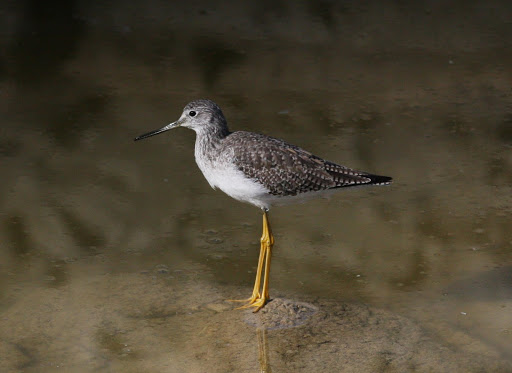
Greater Yellowlegs have been surprisingly scarce, with only a few individuals noted

I won’t list the entire suite of shorebirds, but some of the highlights have been Semipalmated and Snowy Plover, Solitary Sandpiper, Willet, Whimbrel, Semipalmated Sandpiper, Pectoral Sandpiper, Stilt Sandpiper, Baird’s Sandpiper, and Short-billed Dowitcher.  Stilt Sandpiper in particular is a real rarity, with only a handful of records from the LCRV.  This is something of an enigma – they are found regularly at the Salton Sea and are seen every fall in other parts of Arizona, so it’s not well understood why they are not more regular along the Colorado River.

Falling water levels have attracted swarms of other birds to Beal Lake, as well.  Herons have been feasting upon fish stranded in shallow water, while Rallids and ducks enjoy easy access to underwater vegetation.  Even a few migrant landbirds have been in the surrounding brush.

This spot is a real gem.  If our past few visits are representative of typical August shorebird migration, Beal Lake is right up there with the best shorebirding spots in Arizona, and is certainly underbirded!

Getting there: The quickest access is from Needles, CA.  From Needles, you’ll have to navigate through town until you cross the bridge into Arizona (there is only one in town).  We prefer to exit at J Street and follow signs through town, but it’s best to check a map as this can get pretty confusing.  Once across the bridge, move immediately into the right-hand turn lane and turn right (just before the car wash) onto Levee Rd.  Turn right when you reach a stop sign.

If you’re coming from Bullhead City, you’ll come south on Highway 95 to a stop light on Courtwright Rd.  Continue straight through the light, then make a quick left onto Barrackman Rd – this takes you straight to the “River Highway”.  If you are birding Pintail Slough or Topock Marsh first, you will continue north on the highway until it turns west and becomes Courtwright Rd.  From the stop light at Hwy 95, follow the directions above.

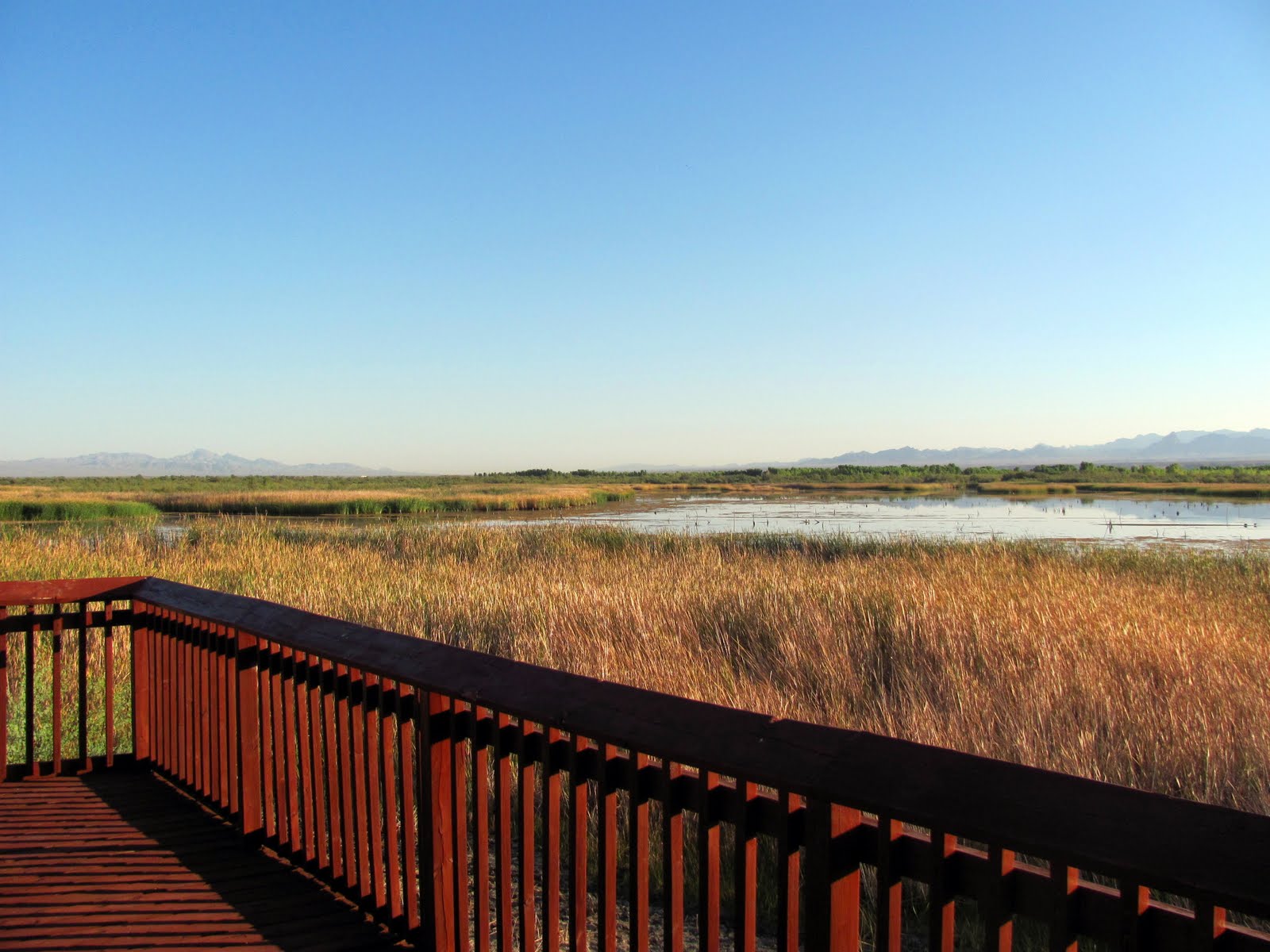
Once on Barrackman Rd/River Hwy, continue south past a few developments.  One on the left has some canals that can be good for ducks in winter.  After this the road becomes gravel – continue on for several miles until the road appears to dead-end at a chain-link fence.  A curve to the left will take you to Beal Lake.  You will pass through a refuge gate – although it is supposed to be closed on weekends, we have never found it closed.  If it is locked, you can park at the gate and walk in – it’s not far to the lake.  Otherwise, drive through and follow the first left-hand turn, just before a locked gate.  This spur will take you to a very nice, newly built platform overlooking the lake.

This platform provides the best overall view of the lake, overlooking most of the central portion.  This is the better place to go for a short visit, birders without scopes, and for most ducks and herons.  However, most of the shorebirds have been concentrating at the south end of the lake, not readily visible from the new platform.  To get to the south end, park at that locked refuge gate and walk for a few hundred meters until reaching an opening with a view of the lake and an old, sketchy platform that looks like it’s ready to fall with the next heavy wind.

The platform is sturdier than it looks, but I wouldn’t recommend it for groups of more than two or for anyone without a sense of adventure.  Hopefully, the refuge will eventually get around to demolishing this and other older platforms and replace them with sturdy public viewing areas.  In the mean time, if you don’t want to climb the rickety stairs, there is enough of an opening in the reeds to bird from the ground.  From here, you should be able to get a decent look at the bulk of the shorebirds on the lake. EDIT: This platform has been demolished and not replaced.

When birding Beal Lake, I can’t stress enough the importance of getting there early.  At any time of year, it is best to arrive before sunrise.  From the main platform, you will be looking east, straight into the rising sun.  With no shade in the area, it gets hot fast, and heat waves make the birding difficult!  At a cooler time of year, an evening visit would likely be worthwhile, when the sun is at your back.  If you choose to walk down the road to the old platform, bring water and a hat.  A scope is always a good idea – the lake is too large to bird easily with binoculars.

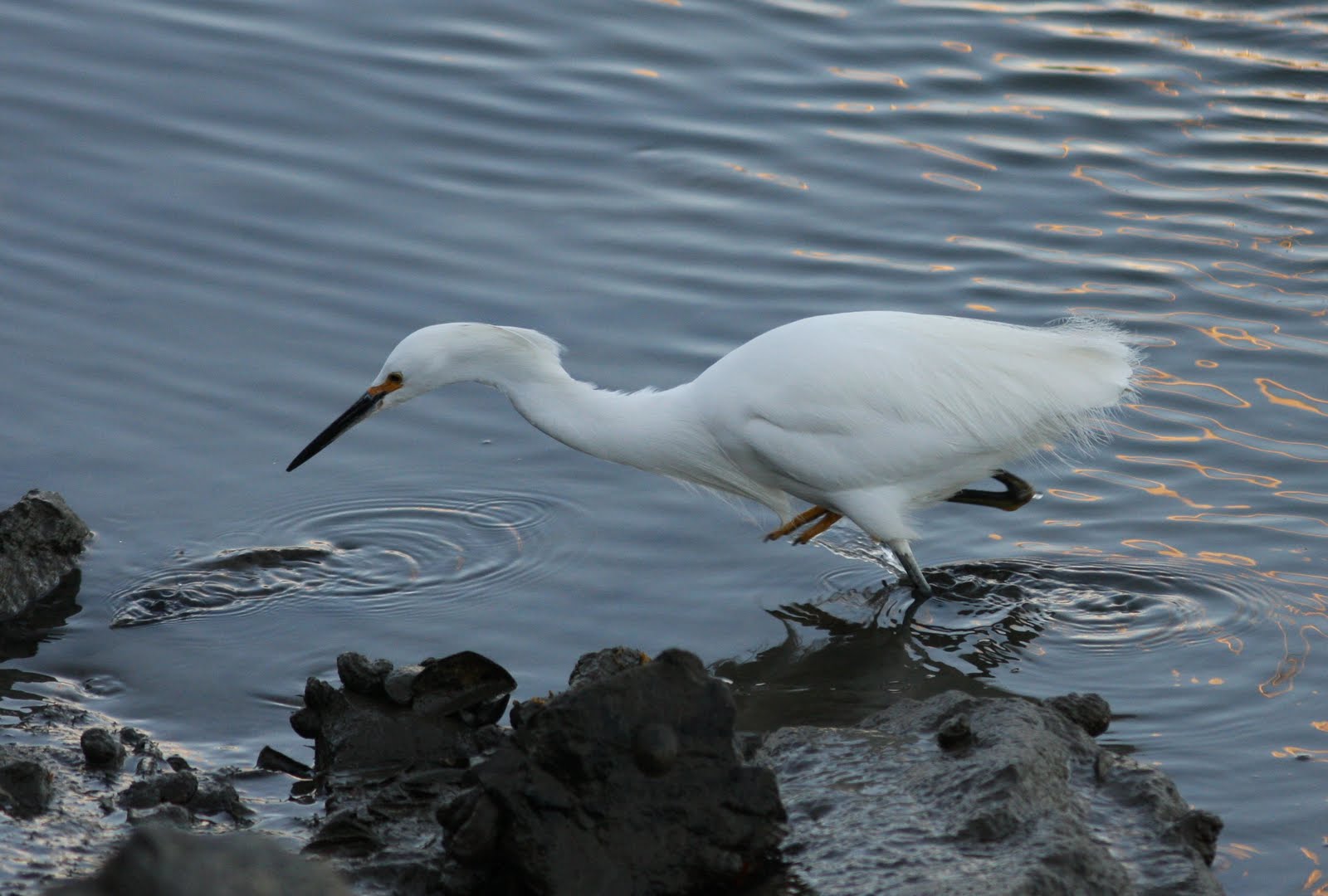
Fishing Snowy Egrets are a common sight on Beal Lake.

While Beal is really top-notch right now for shorebirds, I do recommend the spot any time of year – it is a good place to see ducks, rails, herons, gulls, and terns.  Plus, you never know what will turn up!

Posted in Birding Locations, Havasu NWR, LCRV, Mohave County | Leave a comment

Shorebird migration begins!

I guess I jinxed myself the other day when I said birding has been slow around Lake Havasu.  The next morning (August 10), David and I went to the north end of the lake and found an adult Tricolored Heron!  Since then, we’ve been birding every morning (and will try to continue it) and enjoying some movement of terns and shorebirds.

The Tricolored Heron was particularly exciting because it flew from the Arizona shore, across the lake until it landed in California!  For me, it was a new bird in both states.  More importantly, it was a first for both Mohave and San Bernardino Counties.

Ganked from http://en.wikipedia.org/wiki/File:Tricolored_Heron_by_Dan_Pancamo.jpg

Tricolored Herons are a widespread species, found year-round along the Atlantic coast from Virginia south to Brazil.  They are widespread on the Pacific coast as well, from Baja south to Ecuador.  Only in Mexico and central America are they regularly found inland.  (That information could be outdated, so any correction is welcome.)  In Arizona, the species is casual, most often found from the Tucson area south.  There are only about four previous sightings in the LCRV, which is surprising, since the birds that show up in Arizona are individuals dispersing north from Mexico, and Tricolored Herons are found around the mouth of the Colorado River.

Other exciting birds we saw that day were the first migrant terns of the fall!  Okay, to be fair, a Common Tern in early July was probably a fall migrant, and Caspian Tern fall migration has been happening since the beginning of June.  But now Black Tern migration has begun, with several individuals seen on every visit to the lake.  A few Sterna terns have been seen as well: two Forster’s and one Common were on Havasu on the 10th.  Also worth noting, Ring-billed Gulls have started arriving, including the lovely juveniles.

(not a lovely juvenile)

We have a few favorite shorebird spots in the area.  In Lake Havasu, the beach at Rotary Park sometimes has shorebirds, but the Island STP is generally better habitat.  For a longer morning of birding, the Havasu NWR has some excellent shorebird habitat at Pintail Slough and Beal Lake.  We’ve checked all these sites in the past few days and have been excited to see lots of shorebirds turning up – small flocks of Western and Least Sandpipers, a few Marbled Godwits and Long-billed Curlews, some Black-necked Stilts and American Avocets, several Spotted Sandpipers, a Solitary, a handful of Willets, a few Dowitchers, Greater Yellowlegs, decent numbers of Wilson’s Phalaropes.  Today we visited Pintail Slough hoping for a Semipalmated Plover reported by DeeDee DeLorenzo – not only was there one there, but about ten were at Beal Lake.  The highlight, though, was a Snowy Plover among the Semis at Beal Lake – a scarce migrant in the LCRV.  No real rarities on the list, but I’m always on the lookout for something good on the shimmering mudflats.

What’s weird is that a lot of these birds are showing up late, according to The Book.  When other desert shorebird sites were swimming in sandpipers, all I could turn up here was a single Least Sandpiper!  Terns have been very scarce, as well, with very few in July – Forster’s Terns should already have peaked.  It will be interesting to see if the majority of the birds are just moving south later than usual, or it turns out to simply be a poor year.  I’m hoping for the former!

Posted in Havasu NWR, LCRV, Migration, Mohave County, San Bernardino County, Vagrants | Leave a comment

Birding the Arizona Strip

I admit it, birding around here has been slow lately.  It’s hard to get the motivation to bird when it’s over 110 out, but it’s worth it if there are birds!  Unfortunately, shorebird migration around Lake Havasu has been little more than a few birds here and there.

So to maintain sanity in the desert, I’ve found that an escape to the mountains usually does the trick.  In figuring out birds I need for my Big Year, a number of them fell into the Arizona Strip region.  The Arizona Strip is the part of Arizona north of the Colorado River – largely Mohave County, with few real roads and even fewer people.  Birders seldom venture out there, so there is usually something to discover.  I’ve only done one serious trip out there before, a successful early spring venture in 2008.  I decided to go this past weekend, for two or three days, and see how many year birds I could find.

My itinerary went through several modifications.  At first I planned to visit Colorado City, and surrounding areas, but decided that it probably wasn’t worthwhile in August.  I eventually decided to make a brief visit to the Virgin Mountains to look for Chukar, check Beaver Dam wash for its famous Common Black-Hawks, then drive to Mount Trumbull, where I would camp and hike in search of several species not easily found in Mohave County.  I drummed up a list of 18 target species, of which I found seven, a somewhat disappointing total.  Even though it was only a quick trip and the birding fell a bit short of expectations, it was nice to get away from the heat and enjoy some time in this remote region.

I started my trip Saturday morning, when I awoke at 2:30 am to get on the road.  I arrived in Mesquite, Nevada around 8 in the morning and ventured up Lime Kiln Canyon Road into the Virgin Mountains.

What I found there wasn’t entirely what I had expected…rather than rocky canyons crawling with Chukar (ha), the road passed through former juniper grasslands, which had apparently burned some time ago.  Scattered charred junipers have been replaced by acacia and other desert plants, as well as desert willow and oak.  The avifauna was interesting, including desert species (Black-throated Sparrow), chaparral species (Black-chinned Sparrow), and a few more typical of juniper woodland (Blue-gray Gnatcatcher, Woodhouse’s Scrub-Jay).  It looked like it could have had a few Chukar running about, but all I encountered were Gambel’s Quail.  The highlight wasn’t a bird, but a butterfly:

This is a Meridian Duskywing, a new species for me.  It’s an uncommon southwestern skipper, specializing on oaks.

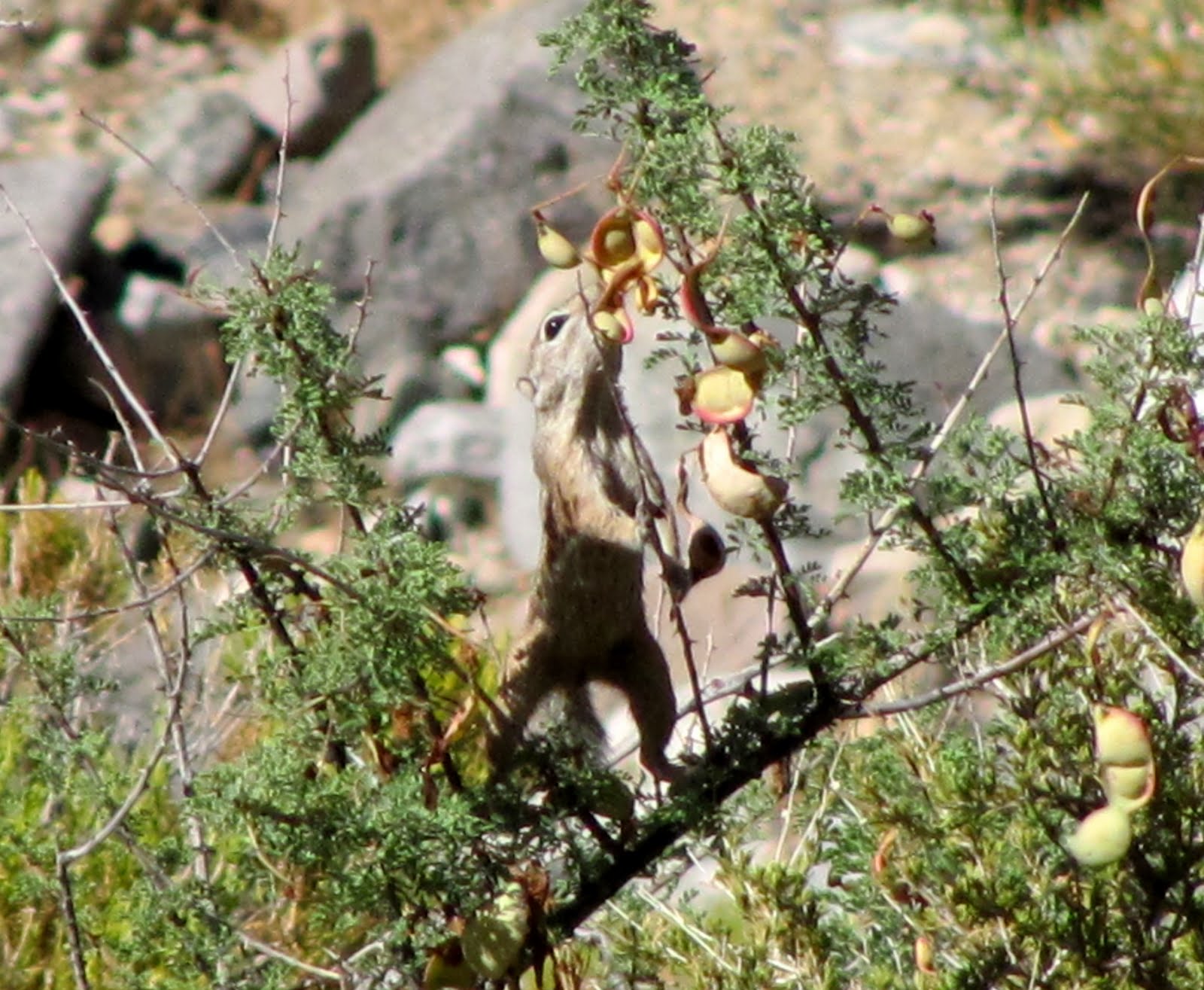
Another fun sight was this White-tailed Antelope Squirrel chowing down on acacia seeds.

I moved on from the Virgin Mountains, eager to check the confluence of the Virgin River and Beaver Dam Wash for Common Black-Hawks.  The day was already hot and I had been seeing plenty of raptors up and soaring.  I started in Littlefield, a nice little agricultural community, but didn’t see any real habitat for black-hawks.  Around the town of Beaver Dam, there are plenty of cottonwoods, but accessing Beaver Dam Wash is fairly difficult.  I found several vantage points from which to scan and listen for hawks, but came up with very little.  Most interesting to me was a family of Brown-crested Flycatchers.  From an ecological perspective, the most interesting sight in this area was the sea of brown tamarisk lining the waterways.  The tamarisk aren’t dead, but defoliated, by the introduced Tamarisk Beetle that has been hard at work in the area.  The introduction of the beetle is somewhat controversial, perhaps a post for another time, but it was fascinating to see the effect it has had on the tamarisk in the area.

Defoliated tamarisk along the Virgin River

Feeling a bit disheartened by two misses, I continued on to St. George then made my way towards Mount Trumbull.

Utah, bzz bzz

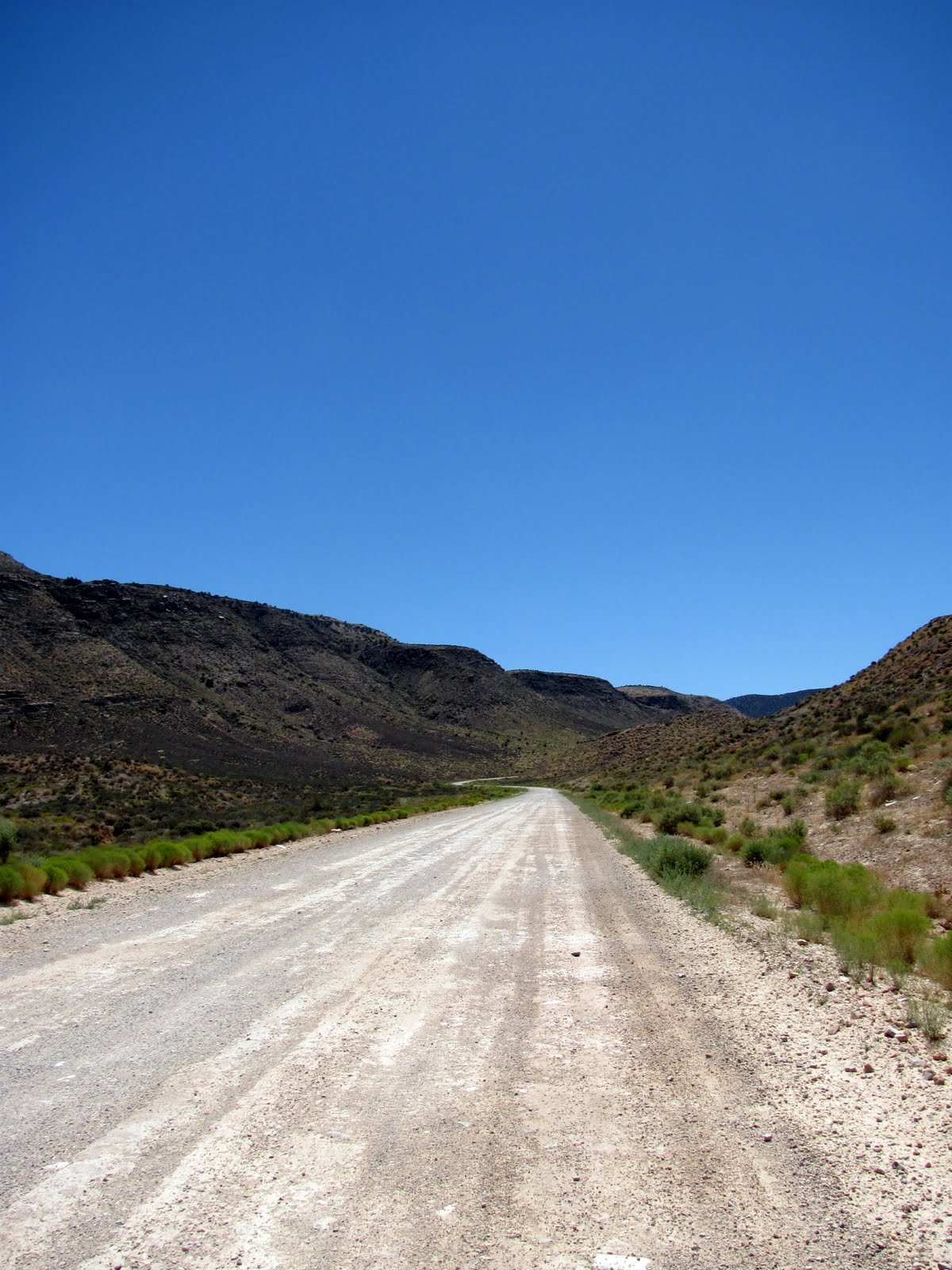
The road to Mount Trumbull from St. George is long, winding in places, and kicks up a lot of red dust.  On my spring trip several years ago, there had been recent rain, and some parts of the road had become very slick.  This time, I actually pushed back my trip a few weeks to avoid rain, and I was glad of it.  Though the roads were completely dry, I saw plenty of evidence of trucks skidding through the muck, leaving some deep ruts.

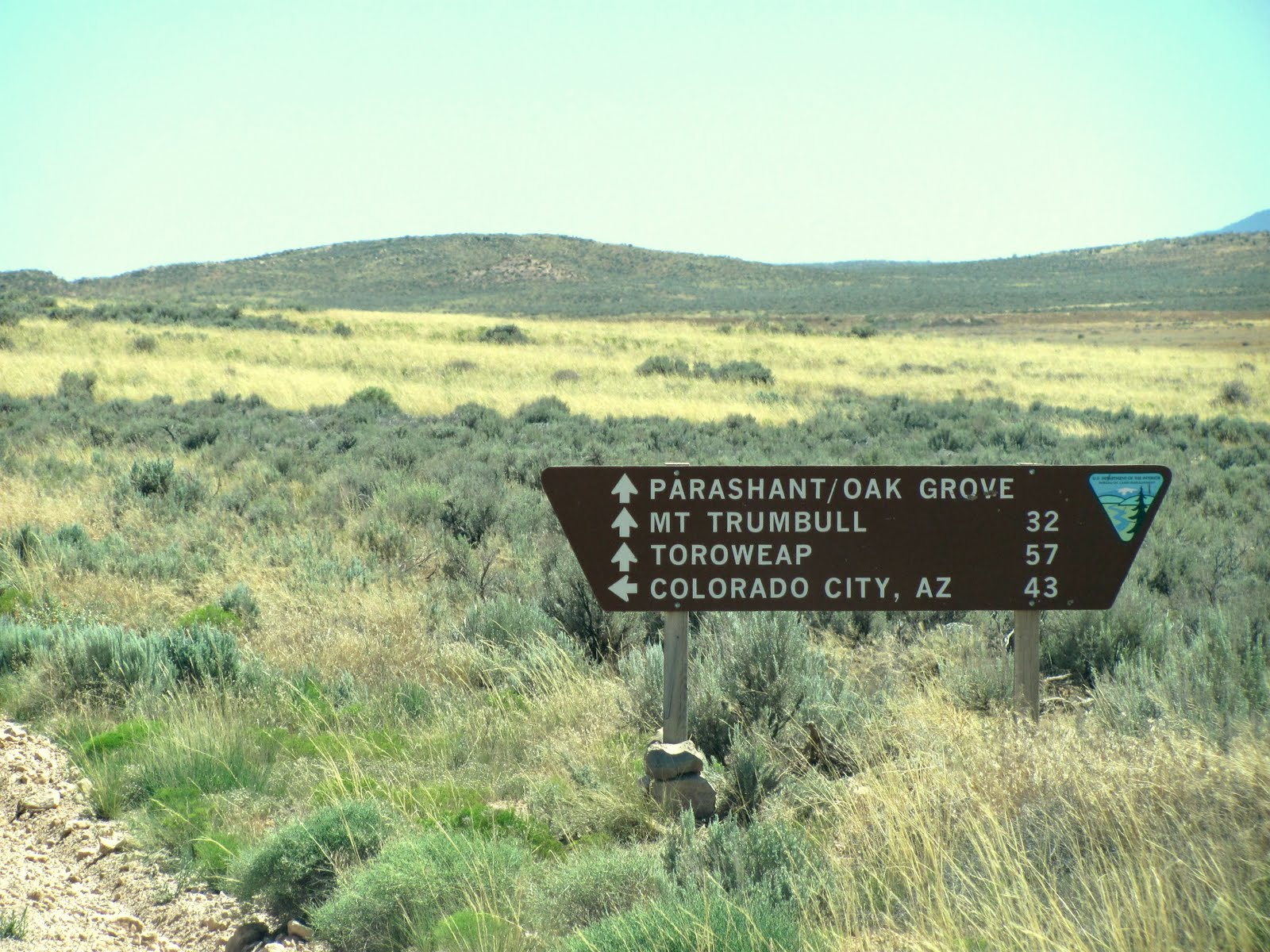
High desert, BLM lands on the Arizona Strip

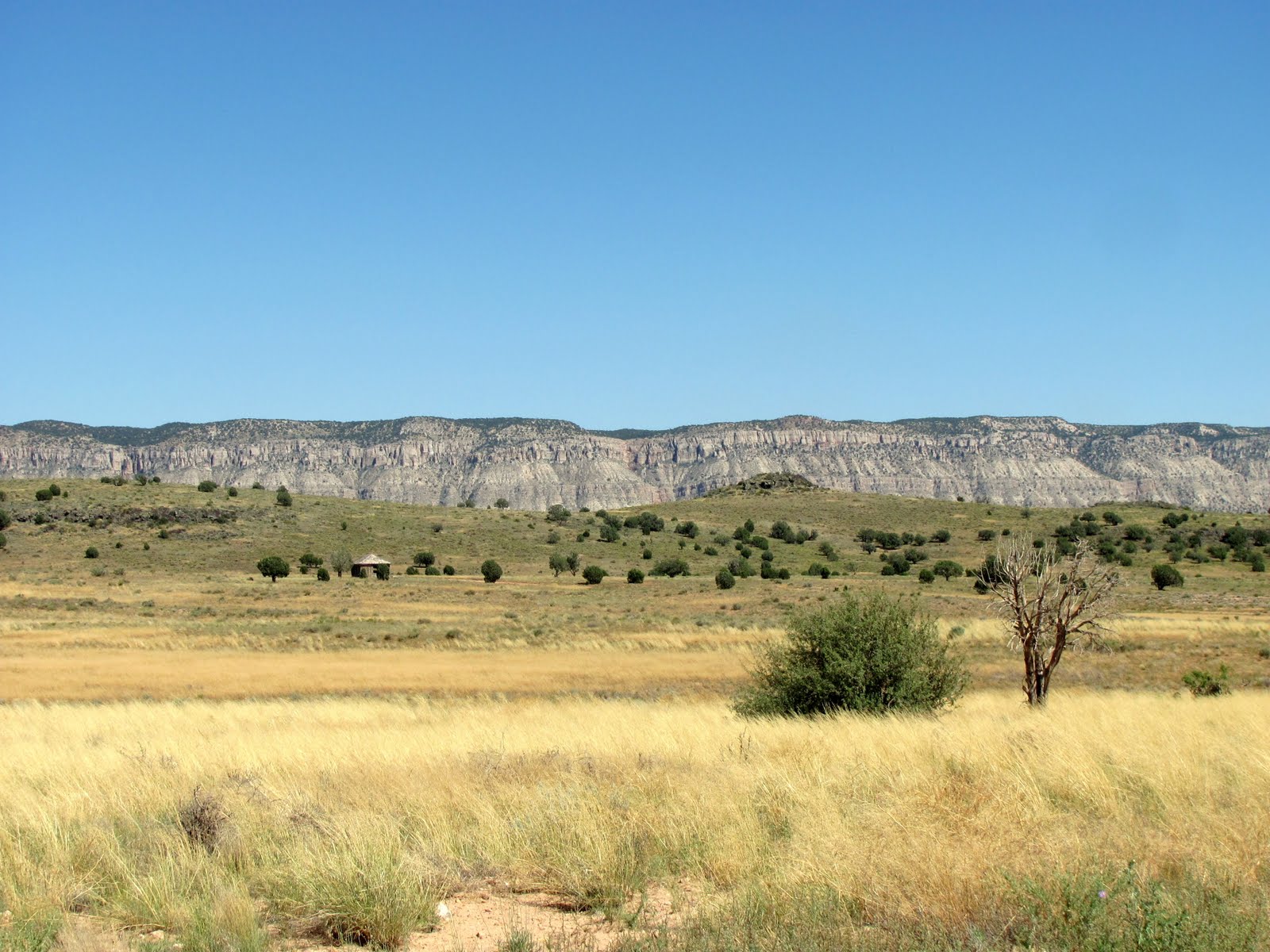
At first, the road passed through some really nice high desert scrub.  It looked good for Bendire’s Thrasher, my biggest miss so far in my big year.  Unfortunately, it was about noon by the time I got this far, and the desert was completely silent.  Soon I climbed up into hills cloaked in pinyon-juniper, and I rolled my windows down to listen for Pinyon Jays.  A few short stops were, again, very quiet.  I started getting birds once the road dropped into the Wolf Hole Valley.  From that point until I reached the town of Mount Trumbull, I passed through vast grasslands.  Some were covered in sage, some with scattered junipers, some obviously overgrazed.  Throughout this section of the drive I kept my eyes to the sky for Ferruginous Hawk, a low-density breeder in these grasslands.  Though I didn’t end up seeing one, I was happy to watch a soaring Golden Eagle.

 
The road through the Strip
Strip grasslands

The most abundant birds in these grasslands were Lark Sparrows.  I flushed several flocks of 40 or so, mostly young birds.  Both Cassin’s and Western Kingbirds were common, as were Loggerhead Shrikes.  My first county year bird of the trip was Mountain Bluebird, a pair of youngsters in an area with some scattered junipers.

The “town” of Mount Trumbull is really little more than a crossroads with an old schoolhouse and a few ranches in the area.  From there, the road turns east and begins to climb toward the mountains.

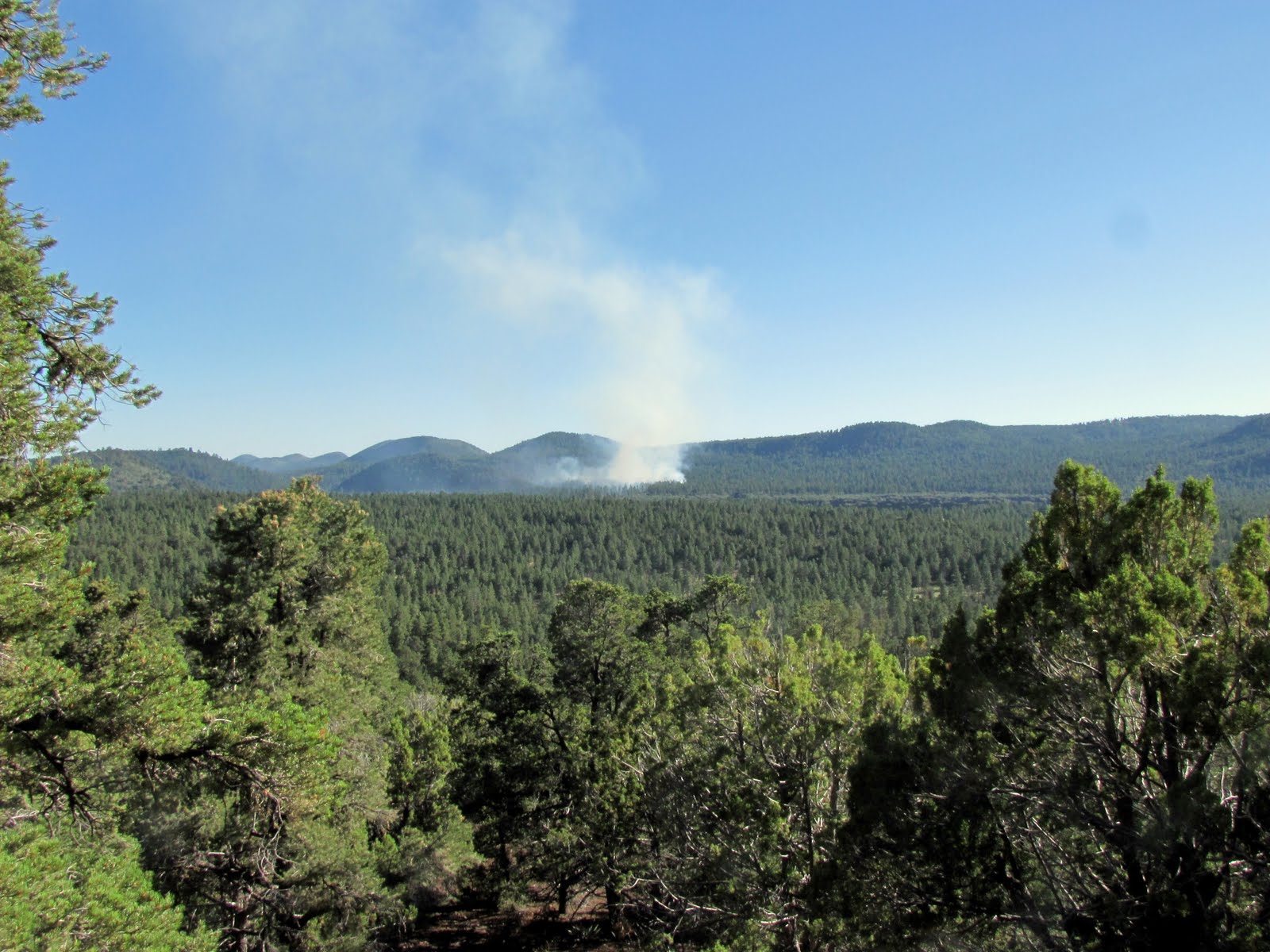
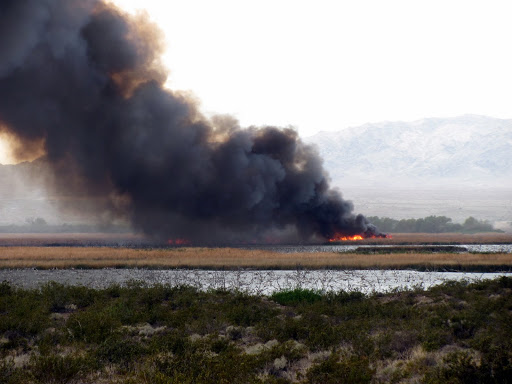
By the time I arrived at the trailhead leading up to Mount Trumbull, it was already past 4 in the afternoon.  I still wanted to do some birding, though it was hot and quiet.  A bit of excitement came when I was at the trailhead and noticed a few White-throated Swifts overhead.  Suddenly I heard the tearing sound of wings moving very fast through the air – and looked up to see a Peregrine Falcon pursuing a swift.  It missed, and dove once more half-heartedly before taking off.  I headed a short way up the trail, enjoying the view and a few birds.  One that caught my attention was a screeching raptor call that left me puzzled – not a Red-tail, and not the right habitat for Swainson’s or Ferruginous.  I wasn’t able to spot it, so I continued on.  On my way up, I had noticed a small plume of smoke coming from the area.  It turned out to be a small wildfire on Mount Logan, which was burning at a low intensity under the control of firefighters.  I have been around a fire like this before – the Warm Fire on the Kaibab Plateau in 2006 – which ended up burning out of control and toasting over 50,000 acres.  This made me just a tad nervous.  Still, fire is an essential part of this ecosystem, and it was interesting to see natural processes at work.

While the scenery was beautiful, I wasn’t picking up many birds, so I headed back down to the road, found a campsite, and set out a plan for the evening.  Some of my biggest targets for the trip were night birds, so I wanted to use my time well if I was only going to be there one night.  Just before sunset, I headed back to the trailhead, which is located next to a big meadow.  I sat and waited.  A cloud of Violet-green Swallows flew over, heading to their roost.  Eventually the bluebirds and Cassin’s Kingbirds quieted down, and a few Mule Deer ventured out into the meadow.  Finally, once dusk was setting in, a few Common Nighthawks appeared over the meadow.  It must have been a long time since I’d seen Common Nighthawks, because I was struck by how different their flight style is from a Lesser Nighthawk.  While Lessers flutter with relatively shallow, quick wingbeats, these Commons were floating, reminding me of Black Storm-Petrels with their deep wingbeats.
My next target was Common Poorwill.  These birds are widespread in the county, including rocky cliffs and canyons in the LCRV, but I hadn’t managed to find any for my big year.  Fortunately, they have a habit of sitting in roads right after dusk, so I figured I’d be able to find one.  After cruising for a little while without any luck, I was thinking that I wasn’t in optimal habitat.  As soon as I approached a rocky flank of Mount Trumbull that looked good for poorwills, I stopped to listen.  It was only a minute before I picked out the distinctive song of a Common Poorwill, soon answered by another.  I tried whistling for Western Screech-Owl here, but got no response, so I headed back to my camp.  Along the way, I stopped suddenly when I came upon a poorwill sitting in the road!  It flew ahead of me, and I saw it look back at me a few times when its eyes flashed their distinctive red eyeshine.
I took a little time to settle into my camp and make myself dinner before I went on an owling excursion.  I had chosen a campsite within a nice stand of Ponderosa Pine, with some pinyon-juniper in the area, that looked good for Flammulated and Western Screech-Owls.  I enjoy hiking at night without the use of a light, and a half-moon made this easy, so I never took out my headlamp.  As I walked down the road, I played the song of Flammulated Owl a few times, never hearing a response.  At the point I decided to turn around, the Ponderosa-pinyon-juniper interface looked particularly good for Western Screech-Owl, so I whistled an imitation of their song a few times.  Silence, except for the yipping of a Gray Fox somewhere nearby.  I turned back and headed toward camp again, and before long I heard the single low hoot of a Flammulated Owl!  It called incessantly for a few minutes, and I stood quietly to listen to it.  While I was listening, I noticed a whistle coming from behind me, which turned out to be a Western Screech-Owl!  I stayed until both birds became quiet, then headed back and settled into my sleeping back, elated to have had such good luck with night birds.
When I woke up to the gray light of pre-dawn the next morning, the forest was eerily silent.  I had hoped for some dawn singing, maybe an Olive-sided Flycatcher, but all I heard singing were a Plumbeous Vireo and a few Western Wood-Pewees.  Still, I felt optimistic about my planned hike to the summit of Mount Trumbull.  Nine of my target birds were possible on this hike, so I hoped to find some mixed conifer or aspen forest, and hopefully a cold-air drainage that may harbor a goshawk.
The most difficult section of the 5-mile trail is the first part, which switchbacks up through pinyon-juniper forest on the south slope of the mountain.  I encountered very few birds here, focusing on getting up into higher forest.  Eventually the trail levels out, entering a beautiful Ponderosa Pine forest with plenty of huge old pines.  I spent more time birding this area, checking several flocks of Pygmy Nuthatches and picking out a decent number of species.  At one point, while I was stopped looking at a Hairy Woodpecker, I heard the single “rawk” call of a Pinyon Jay.  I wasn’t able to see it from where I stood, but I was surprised that it was apparently a single individual (called a few times) and was in Ponderosa Pine forest, not in the extensive pinyon forest nearby.  Still, I was happy to hear it – not only a county year bird, but one of my favorite birds, which I studied as an undergraduate.  The other avian highlight in this area was an adult Zone-tailed Hawk, which gave me great views as it flew low overhead, perching several times in the tops of nearby Ponderosas, and calling all the while.  Its behavior led me to suspect that it had a nest or young nearby.  The range of this species has expanded rapidly in recent years, but it still appears to be very local in this region – maybe another blog post for another time!
I continued slowly up the trail, eventually following it up to (what I thought was) the summit.  Abundant flowers here attracted numerous Broad-tailed and Rufous Hummingbirds, and a small flock included my first Hermit Warbler of the year.  From my vantage point at the top, I had a beautiful view of the Arizona Strip to the north and east.  Reading about the trail on the web, however, it seems that the trail I followed did not exist until recently (which would explain all the rock cairns higher up), and the true summit has an old weather station and USGS marker.  I saw nothing to mark the summit, which I thought was odd at the time.  So, who knows where I was standing!  Anyway, I was disappointed on my hike up that I didn’t see any fir or aspens, habitat for several of my target species.  I took advantage of a decent view of the mountain to scan with my binoculars, looking for canyons that may have patches of fir or aspen, but saw none!  Next time, I’ll have to take my GPS, a compass, and a good topo map to do a bit more exploring.
It was past 9 by the time I headed down, and I knew I’d have to make good time to get home at a decent hour – it’s a long drive back to Lake Havasu City!  I considered staying for another night, but the birding was just too slow to justify it, and I had no idea where I could look for better habitat.  Hopefully I’ll make it up there in the fall, when birds will have moved downslope.  I thought about my missed target species and when I might be able to get them.  Goshawk is never likely, but it’s possible even in the Hualapais.  Northern Pygmy-Owl as well.  Williamson’s Sapsucker may move to the Hualapais in winter.  Olive-sided and Dusky Flycatchers are possible elsewhere on migration.  Clark’s Nutcracker will probably take another trip to Mount Trumbull, but they’re present year-round.
My hike back down the mountain was birdier than the hike up, with some really big flocks of Pygmy Nuthatches accompanied by Mountain Chickadees, White-breasted Nuthatches, Brown Creepers, and even some migrants.  I saw a few more Hermit Warblers, a Townsend’s Warbler, and several Warbling Vireos.  I reached the bottom feeling satisfied with a great hike and two more county year birds, and made the final decision to head home.  The long drive back went quickly – I felt recharged even by a brief trip to the Strip, and I look forward to my next adventure up there.
View of the Arizona Strip from Mt. Trumbull
Addendum.  It was a good trip for mammals, and I want to share my trip list since there is no eMammal.
Desert Cottontail
Black-tailed Jackrabbit
Kaibab Squirrel (a definite trip highlight!)
chipmunk sp. (on Mt. Trumbull, chipmunks were common but didn’t look right for Cliff)
White-tailed Antelope Squirrel
Rock Squirrel
Northern Raccoon
Coyote
Gray Fox
Mule Deer
Merriam’s Kangaroo Rat
Botta’s Pocket Gopher (I didn’t actually see it, but saw a plant being tugged underground by it)
Bats – several species seen and heard, none identified of course!
Posted in Arizona Strip, Big Year, Trip reports | Leave a comment

New AOU Checklist Supplement!

It’s that time of year again, when the American Ornithologists’ Union North American checklist committee has gotten together and made some changes to the “official” checklist of North American birds – adding new species, recognizing splits, reorganizing families, changing names, and all that good stuff.  They don’t always make good decisions, but it’s always interesting to see where recent research in taxonomy has taken us.

The new supplement to the checklist is available in its entirety here, and you can even read the specific proposals here.  Or you can read this blog post to see what’s been changed!  Be sure to stick around until the end, because the thorough reshuffling of the wood-warblers has got to be the most interesting thing to come out of this one.

I’m only outlining the more major points here (especially – but not entirely – the ones relevant to ABA-area birders), so if you’re really interested in the nitty-gritty, be sure to check out the published proposal.

1. Species Added
Species are added when a new vagrant occurs in the AOU area, when existing species are split, or when the AOU recognizes an exotic as having a self-sustaining, established population.  These birds have been newly recorded in North America:
– Tahiti Petrel
– White-chinned Petrel
– Long-winged Harrier
– Gray-bellied Hawk
– Solitary Snipe
– Large-billed Seed-Finch

2. Name Changes
Sometimes what we see as name changes are really the results of splits, for example, with old-world birds.  Other times they’re just…name changes.  The name change from our beloved Common Moorhen to Common Gallinule is the result of a split with the old world Common Moorhen (neither of which, incidentally, are actually found on moors).

3. Just Splits and Lumps
If there is no name change resulting from a split or lump (say, with an old world species), it’s likely to go unnoticed.  In other cases, North American birders may gain or lose a species on their life lists.
Snowy Plover is split from the widespread old world Kentish Plover
– Chestnut-mandibled Toucan is considered a subspecies of Black-mandibled Toucan
– Mexican Jay has been split.  The birds in Arizona are still called Mexican Jay, while the birds farther south in Mexico have gained the awesome name Transvolcanic Jay

4. Taxonomic Reshuffling
Splits and lumps don’t just happen at the species level!  Ornithologists learn new things all the time about the familial affinities of certain birds, where they belong in the grand scheme of things.  Based on some of this research, the AOU recognizes:
– Sandgrouse get their own order, Pteroclidiformes
– Sapayoa gets its own family, Sapayoidae
– Tityras, Becards, Schiffornis, and some Mourners are placed in the a new family, Tityridae (wait, we already knew that)
– Bluethroat, rubythroats, bluetails, wheatears, and Stonechat are moved from Turdidae (thrushes) to Muscicapidae (Old World Flycatchers)
– Bush-tanagers are moved from Thraupidae (tanagers) to Emberizidae (sparrows)

5. Wood-Warblers Rearrange
It’s difficult to give a decent overview of this reshuffling of Parulidae without images, so I recommend checking out the proposal on this one.  There’s a lot to get used to here…

First of all, forget about the genera Parula, Dendroica, and Wilsonia.  They’ve all been moved into other genera!
1. Formerly of Parula, Crescent-chested and Flame-throated Warblers have been moved into Oreothlypis.  You remember Oreothlypis, all those warblers that used to be called Vermivora?  But what about the parulas, you ask?  Newly christened Setophaga (see below).
2. American Redstart is no longer lonely in its own genus (Setophaga).  It’s been lumped with all the (formerly known as) Dendroica warblers, a move which makes sense.  But since Setophaga has priority, that’s what they will all be called, including Northern and Tropical Parula, which are now included in this group.
3. The warblers formerly known as Wilsonia have been scattered around to new genera.  Hooded Warbler joins the party in Setophaga.  Wilson’s and Canada Warblers, along with Red and Pink-headed Warblers (formerly of Ergaticus), have been merged with Red-faced Warbler and its genus, Cardellina.

Another big change is the near-extermination of Oporornis.  It turns out that Kentucky, Mourning, and MacGillivray’s Warblers are more closely related to yellowthroats (genus Geothlypis).  Connecticut Warbler, that strange creature that walks rather than hops, stays cozy in Oporornis.

The tropical-minded will be interested in the splitting of the genus Basileuterus.  The majority of North American species were split off as Myiothlypis, although none of these occur in the ABA-area.  Rufous-capped and Golden-crowned Warblers remain Basileuterus, and Fan-tailed Warbler was merged into it as well.

How about an overview of North American Parulid genera!
– Several monotypic genera remain unchanged, including Black-and White, Prothonotary, and Swainson’s Warblers and Ovenbird.
Parkesia includes the two waterthrushes
Vermivora includes Bachman’s, Blue-winged and Golden-winged Warblers
Oreothlypis includes all the former Vermivora, along with Crescent-chested and Flame-throated Warblers
Geothlypis includes the yellowthroats along with Kentucky, Mourning and MacGillivray’s Warblers
Setophaga includes all former Dendroica, American Redstart, and Hooded Warbler
Myiothlypis includes a bunch of the former Basileuterus
– Basileuterus, much reduced, now includes Fan-tailed Warbler
– Cardellina includes Red-faced, Red, Pink-headed, Wilson’s, and Canada Warblers
Myioborus remains unchanged.  Good ol’ whitestarts.

Whew, that was exciting.  The biggest changes for me will be the name change for Common Gallinule and the warbler reshuffling.  I’ll have to catch myself when I write “COMO” in my notes (COGA now) and when I start talking about Dendroica chip notes.

Folks may be interested in hearing about some proposals that didn’t pass.  Some of these may well be valid changes that come up again after further research.
– Split Mountain Chickadee
– Split Yellow-rumped Warbler
– Change the names of Winter and Pacific Wrens to Western and Eastern Winter Wren
– Recognize Mexican Duck as a full species

Cardellina canadensis
Posted in News | 1 Comment

How I Spent My Spring

To say I had a busy spring would be an impressive understatement!  I continued my part-time job with the City of Lake Havasu, but caved to my desire to get out in the field by working for the Great Basin Bird Observatory.  The GBBO is doing work for the U.S. Bureau of Reclamation, which is doing a lot of work creating and monitoring habitat on the LCRV.  The main part of this work that I’ve been involved in is the Multi-Species Conservation Plan (MSCP), through which the Bureau monitors certain focal species that are not federally listed.  Those that are listed or candidates – Yuma Clapper Rail, Yellow-billed Cuckoo, Southwestern Willow Flycatcher – are covered by species-specific projects.  The Bureau has done a lot of great work with the MSCP and gathered an impressive amount of data.  The technical reports are available online here, a very interesting resource.

The project I helped with this spring was aimed at quantifying the use of different riparian habitats by breeding birds, especially MSCP covered species – Gilded Flicker, Gila Woodpecker, Yellow Warbler, Bell’s Vireo, Summer Tanager, and Vermilion Flycatcher.  Essentially, we were surveying 400m x 400m (ish) plots, recording migrants and mapping every breeding bird we could locate in a morning.  The plots were randomly selected, falling from Laughlin to Yuma, and up the Bill Williams River almost to Alamo Dam.  I won’t go over the protocols and study design in detail here – you can read about it in the 2009 report.

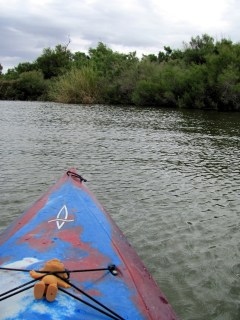
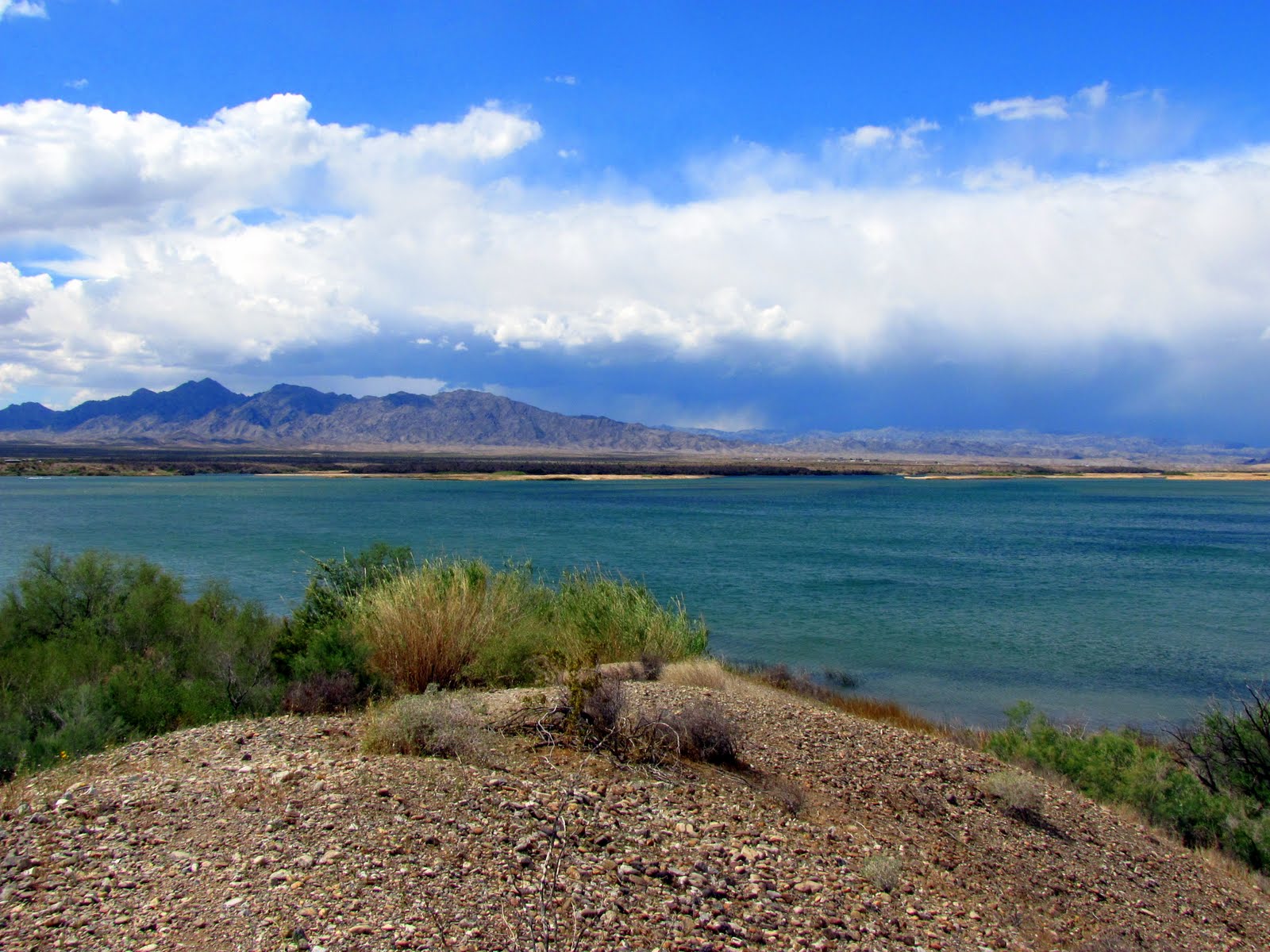
Since I was also working for the city, I was working a bit less than the others on the project, but I was still plenty busy.  I surveyed one site twice a week, another site once a week, and several sites only twice over the season.  The twice a week site was my “extreme intensive” at ‘Ahakhav Tribal Preserve.  I was pleased as punch to visit that site 16 times over the field season!  Since it’s a habitat creation site, it’s easy to walk around and find nests, and it is also full of birds.  The Vermilion Flycatchers and Lawrence’s Goldfinches breeding there were especially fun to watch.  The site I visited once a week was actually immediately adjacent to the hill we scan the north end of Lake Havasu from, which we call “Lehman Hill”.  The hill is the southern boundary of the plot, which extends north about a kilometer in a dense tamarisk/mesquite stringer with patches of arrowweed and some big willows.  The breeders weren’t as interesting, but the site was great for migrants.  Since the site ran along the shore of the lake, I surveyed it by kayak several times.
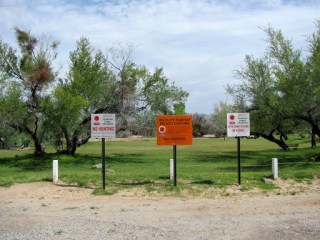
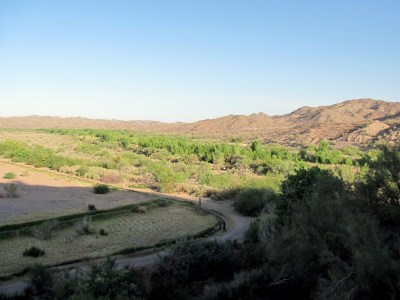
Ahakhav, great spot to spend two days a week
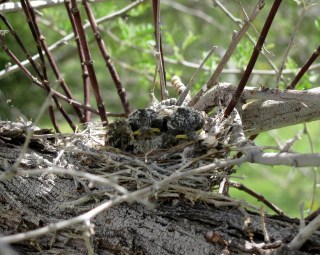
Vermilion Flycatcher babies!
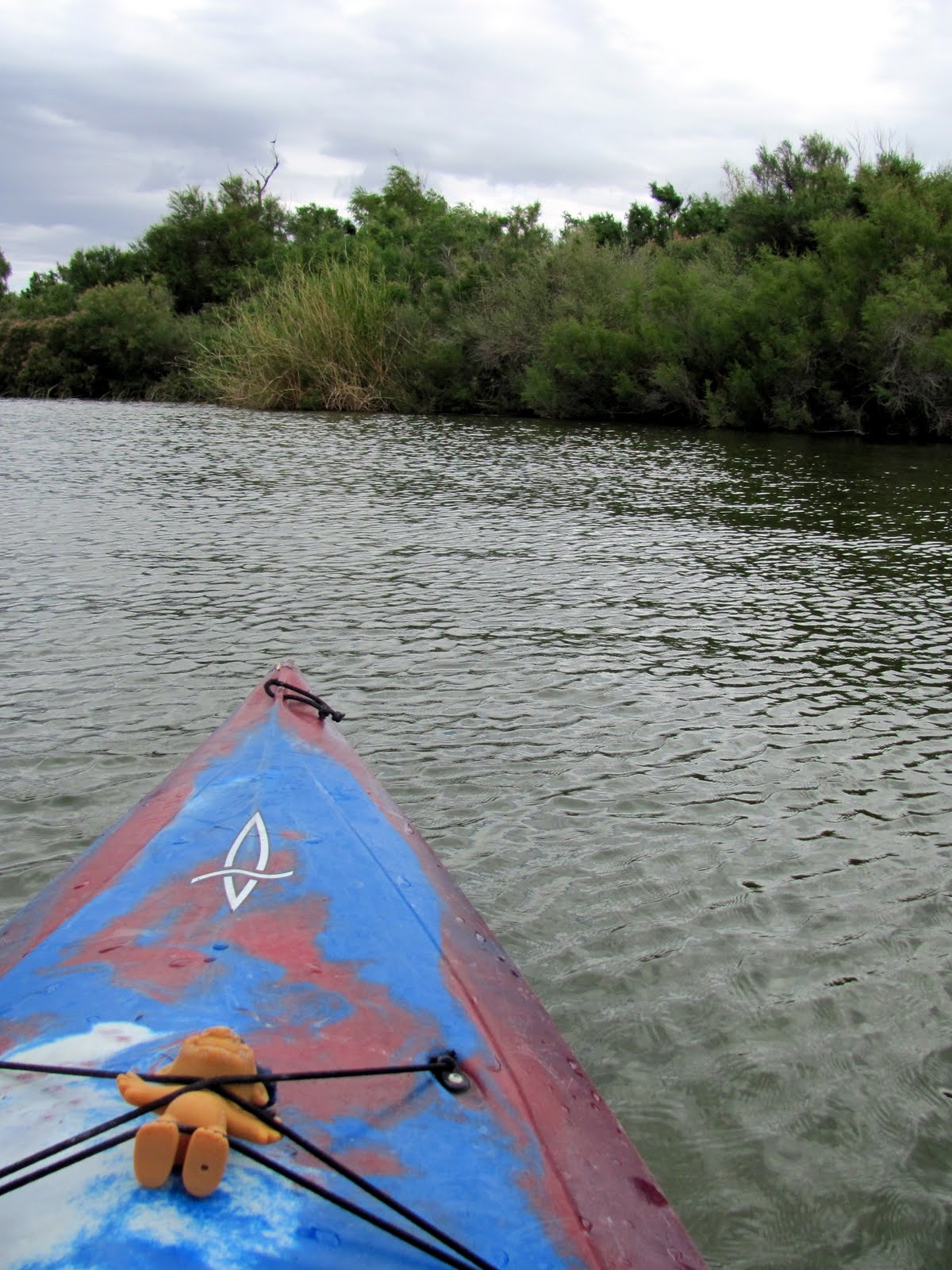
Kayaking the north end

My other surveys were mainly in La Paz County.  Several were in Cibola NWR, one was in Mosquito Flats on the Bill Will, and one was up the Bill Will at Lincoln Ranch, about six miles downstream from the Alamo Dam.  One fell in San Bernardino County near Needles, and I also surveyed the Island STP in Lake Havasu City.
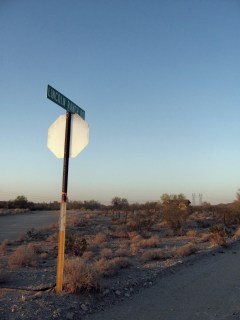
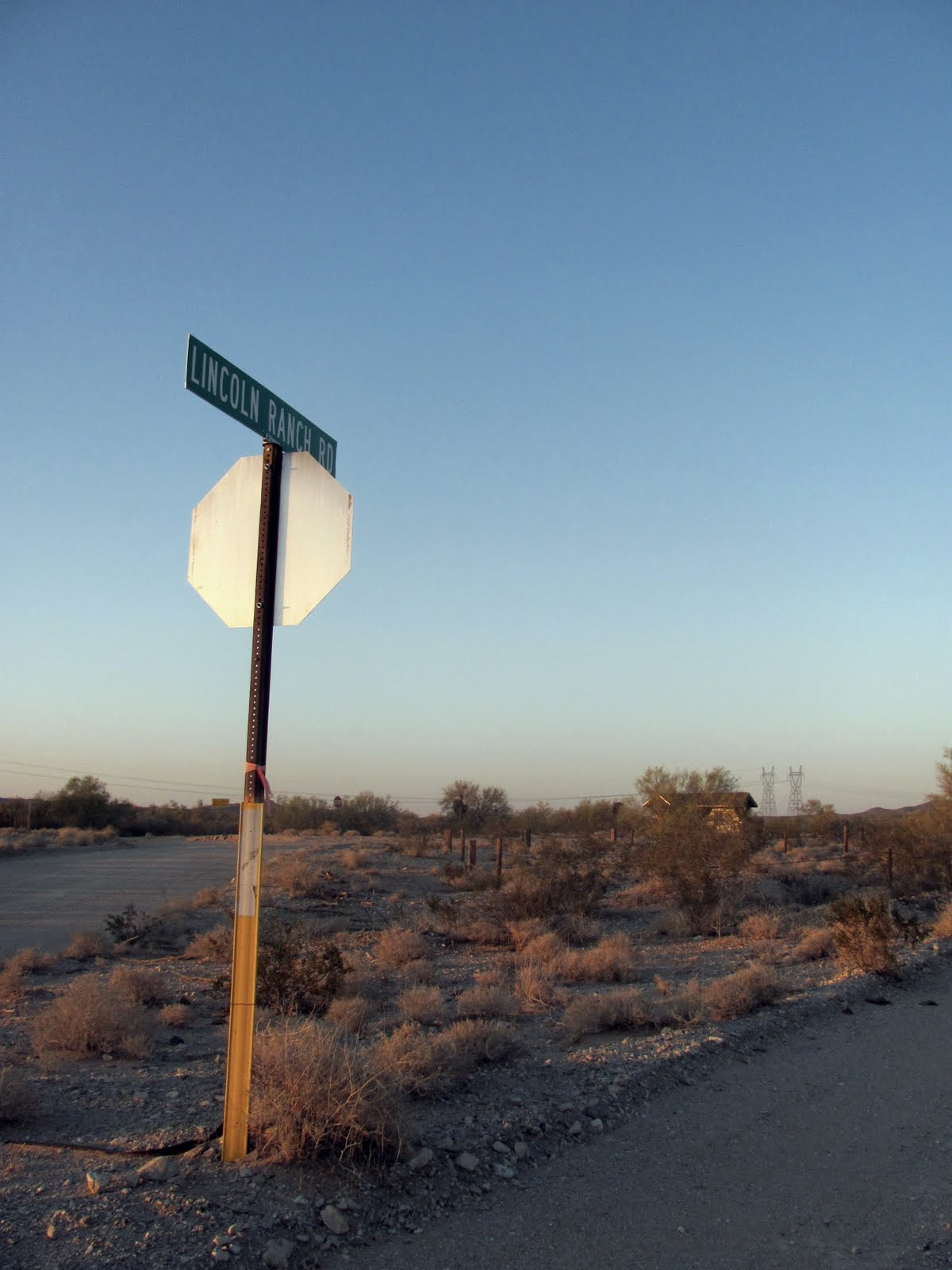
Lincoln Ranch Rd
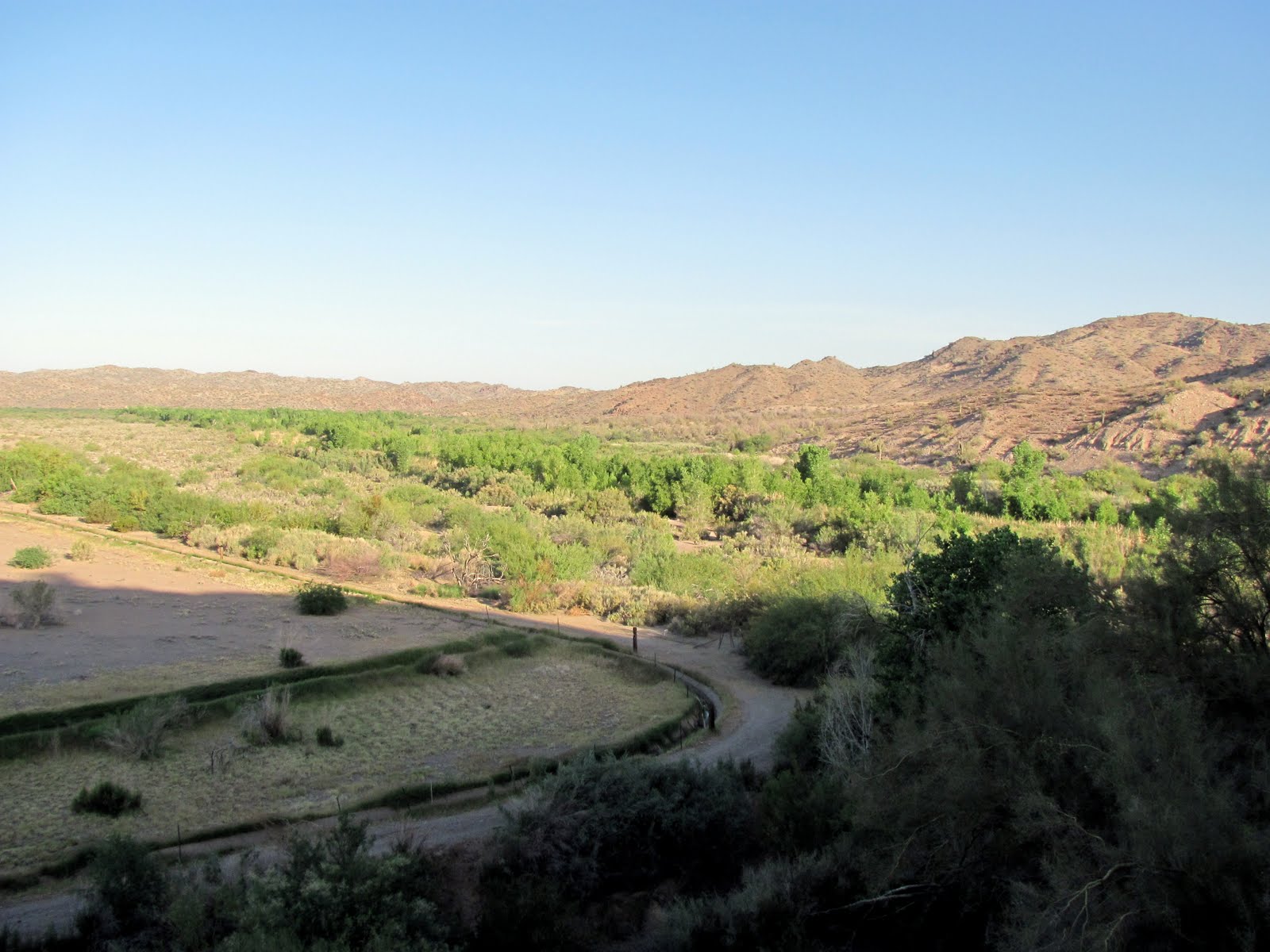
Lincoln Ranch

Just for fun, I put together this summary of spring migration on the LCRV.  This only includes regular migrants, not rarities.  I also omitted any species for which I didn’t get a good sense of their migratory patterns – for example, I missed the arrival of Lucy’s Warblers and saw my FOS long after many had arrived.  This only includes my sightings, so it is by no means a complete summary of migrants this spring.  To read about rarities and overall sightings, we’ll have to wait for AZFO’s spring Seasonal Report.

This being a 12-page word document, I thought I’d stick it behind a cut…

Gadwall
Numbers fell gradually from early to late March, with the exception of a count of 40 at Beal Lake April 9.  Most migrants seemed to be gone by mid-April.  Females at Hart Mine Marsh and New South Dike April 30 and May 15 (respectively) may be summering.
American Wigeon
Wintering birds and/or migrants remained in the area through March, including a count of 120 in Lake Havasu City March 4.  At another site in LHC, numbers dropped from 39 on March 30 to 6 on April 18.  My last observation was a flock of 8 at Hart Mine Marsh, Cibola NWR on April 30.
Cinnamon Teal
Migration dropped off in March, although I did count 37 at Pintail Slough on March 26.  Small numbers continued through April and the first week of May.  Three continued at Pintail Slough May 22, possibly summering.
Northern Shoveler
Migrants dropped off suddenly in early April.  My latest observation was of 20 at Beal Lake April 9.
Northern Pintail
Migrants trickled through this spring, with two still in Lake Havasu City April 15.
Green-winged Teal
Forty-eight remained at Pintail Slough by March 26.  Four at the same location May 22 were quite late.
Canvasback
Small numbers remained through early April.  My latest observation was one at the north end of Lake Havasu April 8.
Ring-necked Duck
While numbers dropped off in February, small numbers remained through mid-April.  My latest observation was of two in LHC on April 15.
Greater Scaup
Nothing about this species was typical this winter, so a count of 108 in the BWD March 10 was little surprise.  By March 24, numbers at the same location had dropped to 31.  One was still at the north end of Lake Havasu May 4.
Lesser Scaup
Wintering flocks were gone by the end of February.   My latest migrants were a flock of 12 off Rotary Park on April 9.
Bufflehead
Numbers at the north end of Lake Havasu dropped off gradually through March then sharply in early April.  A count of 40 on April 2 was reduced to 10 on April 8.  About the same number remained throughout April, and six remained by May 11.
Common Goldeneye
Flock sizes at the BWD decreased around mid-February, though good-size flocks remained through mid-March.  For example, 41 were counted there March 10.  My latest were two at Mesquite Bay April 5.
Hooded Merganser
According to Rosenberg et al., this species should be gone by April.  A male at the north end of Lake Havasu April 2 wasn’t exceptionally late, but a female at Rotary Park April 13-14 was more surprising.
Common Merganser
My latest observation was of a flock of nine flying over Rotary Park March 18.
Red-breasted Merganser
Migration began in late February and continued through the beginning of April.  My highest count was at the end of this period, with 120 at the north end of Lake Havasu April 8.  A flock of six at the same location April 26 was far behind the rest, though Rosenberg et al. note migration continuing into May.
Ruddy Duck
Rosenberg et al. show wintering birds remaining until mid-May, with only a few remaining through the summer.  The pattern we have seen this spring has been quite different.  A noticeable migration peak occurred at the north end of Lake Havasu throughout February, and 130 were present there March 3.  Numbers fell to 50 there on April 2 and to two only six days later.  The following single individuals were noted in June:  BWD June 5, north end of L. Havasu June 8, and Hart Mine Marsh June 11.
Common Loon
Numbers seemed to match their status in Rosenberg et al.  They list it as common through the end of April, with stragglers through mid-May.  At the north end of L. Havasu, our counts included 10 April 9, one April 20, nine April 26, and a single bird thereafter through May 11.
Horned Grebe
While this species was unusually numerous this winter and spring, departure time was typical (early April).  Eight on Lake Havasu March 11 was a good count, and my latest was one at the north end of Lake Havasu April 9.
Eared Grebe
Migration of this species was impressive this April.  Some of my counts on Lake Havasu were:  12 April 2, 310 April 8, 500 April 13, 800 April 14, 130 April 26, 80 May 3, and 40 May 9.  A few are summering at the north end of Lake Havasu.
Neotropic Cormorant
Wintering individuals departed in mid-February.  My only spring observations were of one or two birds at the Island STP in LHC 11 and 30 March.
American White Pelican
No real migration was observed of this species, only a flock of 160 coming in from the east to the north end of Lake Havasu April 26.
Osprey
Apart from several wintering birds, migration timing matched Rosenberg et al. well.  My first migrant was in LHC March 11, and my latest was over the north end of Lake Havasu May 11.
Northern Harrier
Rare in May, so one in the Parker Valley May 1 was on the late side.
Sharp-shinned Hawk
My latest of spring were two at ‘Ahakhav April 25, though I know others had later dates.
Swainson’s Hawk
My earliest was over Havasu NWR April 4.  I repeatedly saw an adult cruising over ‘Ahakhav through May 27, an extremely late date, but other observers continue to see this individual, apparently summering in the area.
Merlin
One at the Island STP in Lake Havasu City April 28 was late.
Prairie Falcon
Since their status is somewhat unique in the area, regular in every month except April, it’s worth noting my three spring observations:  one over the Island STP in LHC April 14, one over Rotary Park May 12, and one over the north end of Lake Havasu May 18.
Sora
My latest was at New South Dike May 15.
Black-bellied Plover
Only one individual was detected to my knowledge, a long-staying bird in alternate plumage at the Island STP in LHC.  My dates for it are April 14 and 15, though others had it before and after.
American Avocet
Passed through in very sparse numbers this spring (that I saw, at least!).  I only observed this species twice, both times at the north end of Lake Havasu: on March 30, three birds; on March 31, two birds.
Solitary Sandpiper
Though this species is only a rare spring migrant, one at the Island STP in LHC April 28-May 3 was on time.
Greater Yellowlegs
Spring migration seemed to happen in a rush, and it occurred from late April to early May rather than in late March to mid-April, as is typical.  My observations were (wintering birds aside):  one at Rotary Park April 26, one at the Island STP April 28, and another or the same bird there May 3.
Willet
Migration was bizarre for this species this year.  It should be common from early April to mid-May.  I only observed two, one at Hart Mine Marsh April 30, and one at Rotary Park May 23.
Lesser Yellowlegs
My only observation was one at the Island STP May 3.
Long-billed Curlew
A flock of 35 was seen flying north over the north end of Lake Havasu March 30.
Marbled Godwit
One at the north end of Lake Havasu March 31 was my FOS, followed April 9 by an impressive flock of 83 at Rotary Park.  Another was at Rotary Park May 3.
Western Sandpiper
My FOS was a flock of 8 at the Island STP April 14.  Small numbers were seen around LHC until April 28, when I had two at the Island STP.  Hart Mine Marsh had much more impressive numbers, with as many as 70 (April 30)
Least Sandpiper
Small numbers wintered, but my first count over 10 this spring was at the Island STP April 14, with 15 birds.  My high count was 30 at Hart Mine Marsh April 24, and my last of the season was 7 at the Island STP May 3.
Long-billed Dowitcher
This species winters in good numbers, so it’s difficult to discern the beginning of spring migration.  My last observation was of 2 at the Island STP May 3.
Wilson’s Snipe
My latest this spring was one at the Island STP April 28.
Wilson’s Phalarope
I was surprised not to see this species regularly this spring.  In fact, the only ones I saw were in a flock of 9 at the Island STP May 3.
Red-necked Phalarope
This species proved just as scarce this spring, with one flock of 4 at the north end of Lake Havasu May 9.
Bonaparte’s Gull
Migration of this species was impressive this year.  I suspect that large numbers typically pass through undetected through a narrow range of dates, and we happened to see some of these birds this year.  March 30, we counted 45 at the north end of Lake Havasu and 44 at Rotary Park.  The next day, only 10 birds were at the north end.  Three were at the north end May 9.
Franklin’s Gull
One at the north end of Lake Havasu April 26 was exciting, but I was surprised to count 27 at Rotary Park May 3.
Ring-billed Gull
Numbers seemed to drop gradually through February into early March.  Numbers were greatly reduced after that, though flocks remained at Rotary Park through the first week of May.  My latest sighting this spring involved 4 at Rotary Park May 17.
California Gull
With no real gaps in sightings this year, it seems that spring and fall migration overlapped for this species.  Notable counts were ten at the north end of Lake Havasu March 30, followed by 23 there the next day.
Herring Gull
Since this species disappeared very suddenly in early February, one at the north end of Lake Havasu April 26 was a surprise.
Caspian Tern
This is another species with an early fall migration, though there is a noticeable gap in sightings in May.  My first sighting was on the Colorado R. adjacent to Havasu NWR March 26, latest was one May 4 at the north end of Lake Havasu.  My high count for the spring was only 3 (April 8), in contrast with higher numbers that have been coming through during their fall migration.
Black Tern
I was always pleased to see this scarce migrant.  My sightings were four at the north end of Lake Havasu May 9, two there May 18, and one in the BWD May 20.
Forster’s Tern
I’m a bit puzzled by a handful of sightings we had in January, since I didn’t see this species again until April 13, when one turned up at Rotary Park.  Two flying over the Colorado R. adjacent to Cibola NWR April 30 were my last of the spring.  At the north end of Lake Havasu April 29, I saw an astounding flock of 60 flying over!
White-winged Dove
I previously mentioned our first of the spring in late February.  Numbers increased rapidly from early to mid-April, until this species became one of the most abundant birds throughout the LCRV.
Lesser Nighthawk
I believe that my FOS in LHC March 15 was likely indicative of an early arrival.  However, I didn’t see another until April 16, probably because I wasn’t out at good times for seeing crepuscular birds until that date.
Vaux’s Swift
I was surprised by the abundance of this species in the LCRV this spring.  The first date I observed them, April 26, I saw 10 at the n. end of Lake Havasu, 3 at Rotary Park, and 2 at the north end again that evening.  The peak of migration I observed was an amazing flock of 30 at Rotary Park May 9 (also that day I saw 6 at the north end and 5 at Ahakhav).  My latest for the season was May 18, with four at the north end.
Black-chinned Hummingbird
After picking up my FOS on Havasu NWR March 26, I began to see this species regularly.  Of course, they only increased in abundance and proved to be a very common and widespread breeder in the valley.
Anna’s Hummingbird
It is very difficult to track migration patterns for this species, but I did notice a great deal of movement this spring.  Numbers seemed to drop sharply in mid-May.  On May 13 at Ahakhav, I counted 14 individuals.  My next visit to Ahakhav May 21, I only had four!
Costa’s Hummingbird
I noted this species consistently through April 17.  After that date, my only observation has been of one on the Bill Williams May 14.
Belted Kingfisher
This species seems to be mostly gone by the end of February.  My latest observations were one at Pintail Slough Feb 20, at Parker Oasis April 10, and the Bill Williams April 11.
Northern Flicker
Red-shafted Flickers lingered in the Valley through March 12, when I had one at ‘Ahakhav.
Olive-sided Flycatcher
This proved to be a scarce migrant, with my observations, all of a single bird at ‘Ahakhav, on May 21, June 1, and June 3.
Western Wood-Pewee
My FOS were three at ‘Ahakhav April 25, continuing in the Valley through June 11, with one at Hart Mine Marsh.  The peak of migration this year seemed to occur the first few days of June; my high count was 15 at ‘Ahakhav June 1.
Willow Flycatcher
My FOS was at ‘Ahakhav May 9.  Considering the status of Southwestern Willow Flycatcher as a scarce breeder in the LCRV, it is a bit complicated to figure out the latest spring migrants.  As near as I can figure it, my latest spring migrant was in the Parker Valley June 5.  Even as migrants, this species is certainly uncommon; I had no counts greater than 5.
Hammond’s Flycatcher
I was a bit surprised by the scarcity of this species this spring, despite its status as the second most common migrant Empid in the LCRV.  My first and last of season (both at ‘Ahakhav) were, respectively, April 16 and May 23 (3 birds).  I twice had a high count of 5 at ‘Ahakhav, April 25 and May 9, although I generally did note a few Dusky/Hammond’s.
Gray Flycatcher
I believe this species was more common this past winter in the LCRV than it was as a spring migrant!  The wintering individual at ‘Ahakhav lingered through April 10.  My only migrants were at Rotary Park April 28 and New South Dike May 15.
Dusky Flycatcher
I didn’t realize until May that this species would be so rare in the LCRV during migration.  Although I have a number of Dusky/Hammond’s in my notes, the only bird I actually identified as a Dusky was on the Bill Williams May 14.
Pacific-slope Flycatcher
Witnessing the migration patterns of this species was one of the most satisfying experiences of my spring.  Since I am using eBird to write this document, and I tended to enter calling females as “Western” Flycatchers, my notes exclude a good deal of birds seen.  Still, the patterns are interesting.  My first was at the Bermuda Restoration Area March 16.  I didn’t see another until April 16, my first survey at ‘Ahakhav.  My last of the season were at ‘Ahakhav, two on June 10.  The peak of migration was May 9, an Empid-filled survey at ‘Ahakhav during which I counted 34 Empids: 1 Willow, 5 Hammond’s, 3 Dusky/Hammond’s, and 25 Pacific-slope/Western.
Brown-crested Flycatcher
My earliest spring arrivals were two at Lincoln Ranch on the Bill Williams – granted, not in the LCRV, but close enough.  I was thoroughly confused by this species throughout the season, as they seemed to pair up and establish territories only to disappear completely on my next visit.
Western Kingbird
For some reason, I found this species oddly elusive at the beginning of the spring.  While others were observing them earlier, I finally saw my FOS – 11 birds in the Parker Valley – April 10.
Plumbeous Vireo
During the spring season, I did not realize the scarcity of this species in the LCRV, so I wasn’t looking critically enough at birds that appeared to be Plumbeous Vireos.  The one I am sure of was a singing male at ‘Ahakhav March 12, but I have changed my other observations to Plumbeous/Cassin’s.  In the future, I’ll know better!  This is a good example, I think, of holding accuracy above precision, and not considering the species level the final word in identification.
Cassin’s Vireo
My earliest was April 9 at Rotary Park.  This was an uncommon migrant; I counted three several times, but my high count was only 5 at ‘Ahakhav May 23.  My only observation after that date was of one at ‘Ahakhav June 3.
Warbling Vireo
My first recorded was at Parker Oasis April 10.  Migration peaked early, with 10 at CVCA April 23, but I recorded migrants through June 10 (‘Ahakhav).
Tree Swallow
My high count during spring migration was 7500 birds, a veritable swarm over the north end of Lake Havasu April 2.  Numbers dropped off sharply and this species was uncommon by May.  My later observations are: two at the north end of Lake Havasu May 25, one on Cibola Lake June 5, and individuals at the north end of Lake Havasu June 8 and 10.
Violet-green Swallow
An early individual was seen on Lake Havasu February 1.  My next record is of two at Pintail Slough February 20, although I had one in the interim time on the Parker Strip that apparently didn’t make it into eBird.  My high count was a true spectacle of migration: in an hour and a half spent at Rotary Park March 4, I counted 3,189 Violet-green Swallows flying north.  Since this species breeds in small numbers in the LCRV, my latest migrant is difficult to determine, but it was likely one at the north end of Lake Havasu May 18.
Bank Swallow
My earliest date was April 26, with two at the north end of Lake Havasu.  My high count was also on my latest date this spring, with 21 at the north end May 18.
Barn Swallow
Excluding a few sightings in January on Lake Havasu, most likely a wintering individual, my earliest arrivals were two at the north end of Lake Havasu March 22.  A big push occurred on April 30, when I counted 22 flying over CVCA near Cibola.  I saw this species regularly through the first week of June, but after June 5 did not see another until June 11, with one over CVCA.
Cliff Swallow
My FOS was over southern LHC February 24.  After this sighting, I began seeing them regularly, although they did not show up in numbers until about mid-March.
House Wren
This species seemed to depart early this spring; although I observed them regularly through April 9, I did not see another until two stopped at ‘Ahakhav April 27, my latest observation.
Blue-gray Gnatcatcher
These little birds were notably absent as migrants this spring.  While I recorded them fairly commonly in January, I only saw one in February, none in March, and my latest date was April 10, when one was last seen at ‘Ahakhav.
Ruby-crowned Kinglet
Most seemed to clear out in the beginning of May.  After May 2, I did not observe another until my last of the season, one on the BWRNWR at Mosquito Flats May 14.
Swainson’s Thrush
I was surprised to find this species commonly during spring migration in the LCRV.  Since this seemed to be a good spring for them across Arizona, I’ll be interested to see how common they are next year.  My observation dates range from May 7 (one in the Hualapais – not the LCRV but I’ll include it for an early migrant) through June 7 (with two remaining at ‘Ahakhav).  My surveys at ‘Ahakhav consistently turned up a few birds, but my high count was May 30, when my survey on the BWRNWR in Mosquito Flats, covering a 400m x 400m area, turned up 15 individuals.  In total, I observed a total of 42 individuals in the LCRV this spring.
Hermit Thrush
During the period when Swainson’s Thrushes were moving through, Hermit Thrushes were already gone – my latest observation within the normal migration period was April 25, with one at ‘Ahakhav.  Another was at ‘Ahakhav May 21, quite late for this species.
American Pipit
Pipits dropped off suddenly at the end of April.  My latest observation was of three April 28 in Lake Havasu City.
Cedar Waxwing
Since this species was nearly absent from the LCRV this winter, it was possible to document their spring migration.  My FOS for the LCRV, a flock of 28 passing by Lake Havasu April 20, was also my only count over 5 for the LCRV.  Migration continued through spring; my latest was at ‘Ahakhav June 3, although others reported them later.
Orange-crowned Warbler
This species was uncommon through mid-May, when my latest was at Rotary Park May 17.  Another was late at ‘Ahakhav June 1-3.
Nashville Warbler
This warbler was fairly common during its short migration period.  I observed Nashvilles from April 22 (five at ‘Ahakhav) through May 14 (one at BWRNWR, Mosquito Flats).  Before the late bird on the Bill Will, my latest was at the north end of Lake Havasu April 26.  My high count was eight, April 25 at ‘Ahakhav.
Yellow Warbler
My earliest record was of two at BWRNWR, end of the road, April 11.  The peak of migration fell in mid-May.  May 17, 10 were at Rotary Park.  May 18, 16 were at the north end of Lake Havasu.  May 19, 15 were at Beal Lake.
Yellow-rumped Warbler
Since this species was more common in winter than it was during migration, migration patterns were difficult to detect.  Two notable pushes of migrants were:  81 at ‘Ahakhav April 16, and 31 at the north end of Lake Havasu May 4 (including 5 Myrtle Warblers).  My latest migrant was at Parker Oasis May 21.
Townsend’s Warbler
Another fairly common migrant, Townsend’s Warblers were steady from April 23 (CVCA) through June 5 (Parker Valley).  I only had one individual most days in the field, although I had some days with 3-6 individuals.  My count of 6 was from ‘Ahakhav Tribal Preserve, June 1.
MacGillivray’s Warbler
This turned out to be a rather uncommon migrant; although counts of 2 were regular, I never had more than 3.  Early and late dates, both with 2 individuals, were April 22 (‘Ahakhav) and June 2 (n. end Lake Havasu).
Wilson’s Warbler
My early date of March 12 (‘Ahakhav) matched arrival dates in the rest of Arizona, but was very early for the LCRV.  I did not record another until March 26, with two at Bermuda Pasture.  Migration peaked May 23, with 50 passing through Parker Oasis.  Counts up to 20 were regular this spring.  My late date was June 8, with one at the north end of Lake Havasu.
Yellow-breasted Chat
My first record of a singing chat was on April 20, when two were at the north end of Lake Havasu.  They subsequently became quite common in most riparian areas along the river.
Green-tailed Towhee
This scarce migrant passed through between April 26 (Rotary Park) and May 19 (Beal Lake).
Chipping Sparrow
The pattern of Chipping Sparrows this spring is somewhat mysterious to me, enough that I want to wait another season before commenting on their migration.  I can say that they seemed to be scarce migrants, and most were gone by the first week of May.  One lingering individual in alternate plumage was at ‘Ahakhav May 29.
Brewer’s Sparrow
This is a scarcer migrant in the LCRV than Chipping, tending to stay further inland (?), but I can make some interesting notes about them.  Since few were at Kohen Ranch on the CBC, 80 there April 11 seemed to be migrants.  The last I saw was on the BWRNWR, at the end of the road, May 14.
Savannah Sparrow
This species dropped off quickly at the Island STP, where they wintered in good numbers, from 12 April 28 to two May 3.
Lincoln’s Sparrow
Migration peaked around March 26, when I had ten at Bermuda Pasture and two at Pintail Slough.  Most were gone by the second week of April (one at the north end April 8), but one was there again April 20.
White-crowned Sparrow
The vast majority of wintering birds and migrants were Gambel’s, which took off by the first few days of May, my latest being at the north end of Lake Havasu May 4.  I had a total of three Mountains in the LCRV, May 11-12.
Dark-eyed Junco
This was another sparrow showing odd migration patterns this spring.  With none present at ‘Ahakhav over the winter, twelve Oregon Juncos there February 13 seemed to be migrants.  Another flock was there March 12, consisting of eleven Oregon, two Slate-colored, and two Cassiar Juncos.  Finally, a Cassiar was at the north end of Lake Havasu March 31.
Western Tanager
My earliest were six at BWRNWR, Mosquito Flats April 17.  I had high counts of 12 twice, first at Parker Oasis May 21, then at ‘Ahakhav May 29.  My latest were two at ‘Ahakhav June 7.
Black-headed Grosbeak
The fact that my FOS for this species were four in one day in the Hualapai Mountains suggests that I missed the earliest arrivals of migrants in the LCRV.  Still, I’ll note that my earliest in the LCRV were two at CVCA April 23.  My high count was only five, at BWRNWR, end of the road May 14.  My latest record was of two at CVCA June 11.
Blue Grosbeak
My first sighting of this species was right about on time, two males at Cibola, CVCA April 23.
Lazuli Bunting
This species was seen in small numbers, but regularly, from April 26 (three at the north end of Lake Havasu) through June 4 (two at CVCA).  I recorded a big push May 18, when 15 were at the north end of Lake Havasu.
Brewer’s Blackbird
This species seemed to disappear without my noticing!  My latest observation was of 30 at ‘Ahakhav April 16.
Brown-headed Cowbird
The earliest I recorded cowbirds away from wintering areas was March 15, when one started singing in Rotary Park.
Hooded Oriole
This is a rather scarce migrant and breeder in the LCRV, but my FOS, on the BWRNWR April 11, seems about right for an early arrival.
Bullock’s Oriole
These birds arrived in early April; my FOS were two at Bermuda Pasture April 4.  Numbers increased by the last week of April.
Pine Siskin
This irruptive species was scarce in the LCRV this year, occurring only as migrants, not wintering (at least north of Quartzsite).  I heard one flying over Rotary Park April 9, and had two at ‘Ahakhav the next day.
Lawrence’s Goldfinch
The movements of LAGOs this spring is puzzling to me.  I observed three nests being built at ‘Ahakhav, each of which was promptly abandoned.  After the first nest was abandoned, the birds were absent from the preserve for a month.  I did note a push of migrants April 10, with twelve at ‘Ahakhav, dropping to three there April 16.
American Goldfinch
This winter was not a good one for wintering finches in the LCRV, and American Goldfinches were absent as well.  Small flocks were noted in mid and late March, with 1-2 lingering at ‘Ahakhav through May 2.
Posted in Bill Williams, Conservation, La Paz County, LCRV, Migration | 1 Comment

Monsoon

I promise I am working on a post to explain my long blogging hiatus.  But for right now, I just have to note that our first monsoon storms paid us a visit!  On July 3, a thick, dusty haze blocked out our view of the mountains.  That night, a thunderstorm rolled into town, producing some impressive winds (chairs ended up in pools), dazzling lightning, and turned the streets of Lake Havasu City into temporary torrents.
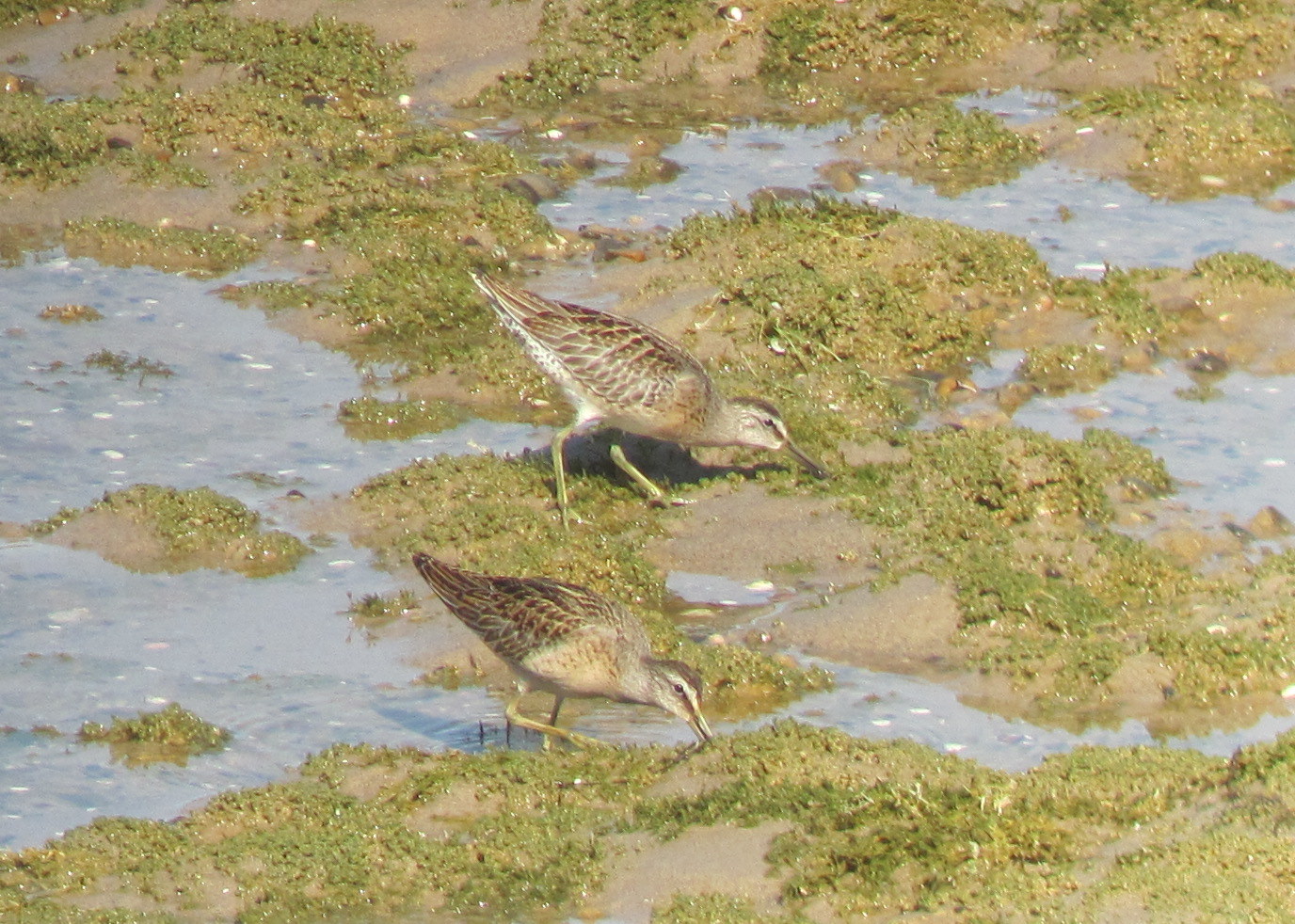
So far, we haven’t seen anything crazy, but we have the whole monsoon ahead of us!  July 4 we did spot a Common Tern at the north end of Lake Havasu, and two biologists working at the Bill Will spotted a Brown Pelican there.  Who knows what fall will bring!

Posted in LCRV, Migration | Leave a comment

Migration and Big Year Update, spring storms

Blogging has been put on the back-burner in the past few weeks, due to increased demands from birding, work, and my immune system.  I’m starting to get back into the swing of things, though, so here is an update about avian goings-on around here!

Life became exciting on March 30, when a scan from the north end of Lake Havasu produced a push of waterbird migrants!  Among the birds moving by were a flock of 45 Bonaparte’s Gulls, 35 Long-billed Curlews, 3 American Avocets, and 45 Red-breasted Mergansers.  Another flock of 44 Bonaparte’s Gulls was at Rotary Park that day.  This was a great count, given that Bonaparte’s Gull is considered rare in the LCRV!  The next day, we went back to the north end and observed moving north: 6000 Tree Swallows, 23 California Gulls, 10 Bonaparte’s Gulls, a Marbled Godwit, and a smattering of waterfowl.

Marbled Godwit

Since then, the waterbirds have been shuffling about and moving through.  Scaup, Redhead and Red-breasted Mergansers have been on their way out, while Bufflehead have also gradually decreased.  The Black Scoters and Long-tailed Duck consistently seen at Bill Williams Delta seem to have taken their leave.  Today, 83 Marbled Godwits graced the beach at Rotary Park.  Caspian Terns are moving through as well.

Songbirds have been late to arrive.  Typically, the LCRV leads the rest of Arizona in spring arrivals.  This year, however, we have lagged well behind.  The sudden arrival of White-winged Doves around April 3-4 was a welcome change (remember the early loner that showed up at Rotary Park in late February?).  Male Lucy’s Warblers are singing up a storm, but Wilson’s Warbler migration is still just a trickle, and no Yellow Warblers or Yellow-breasted Chats have been reported yet.  A few Bullock’s Orioles have arrived and started singing, and a Western Kingbird in Needles today was my FOS.  Meanwhile, the resident birds – Anna’s Hummingbirds, Great-tailed Grackles, Abert’s Towhees, Black-tailed Gnatcatchers – have already begun nesting.

Just passin’ through – Wilson’s Warbler

The Big Year stands at 181.  Since my last update, my 16 new species have all, save two, been migrants.  Most were listed above.  Most were expected or overdue, although a few, such as American Goldfinch and Cattle Egret, are less common in the area.  For those who are wondering, #166 was Virginia Rail, heard on a solo night hike around Pintail Slough.  And the newest addition, seen today, at long last, was my big year nemesis, Common Moorhen!  After a thorough scope of Beal Lake searching every visible cranny for this recently-elusive Rallid, I decided to double-check one nice-looking patch of marsh…and there it was, swimming across the open water as fast as its lobed toes would take it!

I would be remiss not to mention the storms going through town the past few days.  Last week, temperatures broke 100, and I was preparing to live in a furnace until October.  Relief came swiftly, with highs below 70 (!) and rain falling Thursday, Friday, and today (Saturday).  I-40 was closed today due to snow at higher elevations, and trucks piled into the gas stations at Highway 95.  As we were leaving Beal Lake, great big gloppy raindrops began to splatter on my windshield, and before long it was pouring, with freezing rain, and lightning striking around us.  As we were driving, paralleling Topock Marsh, I noticed a plume of black smoke.  Getting closer, we could see it was a fire in the marsh – presumably caused by lightning – with tall flames licking the damp sky, pouring out a stream of cattails reduced to ash.  It was a memorable sight to see, a completely natural process at work.  In the short term, habitat was burning up, undoubtedly taking some wildlife with it.  In the long term, though, fires open up the marsh, recharge the soil, and keep the marsh healthy and functional.

Topock Marsh fire
Snowing in the Hualapais
The north end of Lake Havasu after a storm
Posted in Big Year, Havasu NWR, Lake Havasu, LCRV, Migration, Mohave County | Leave a comment